
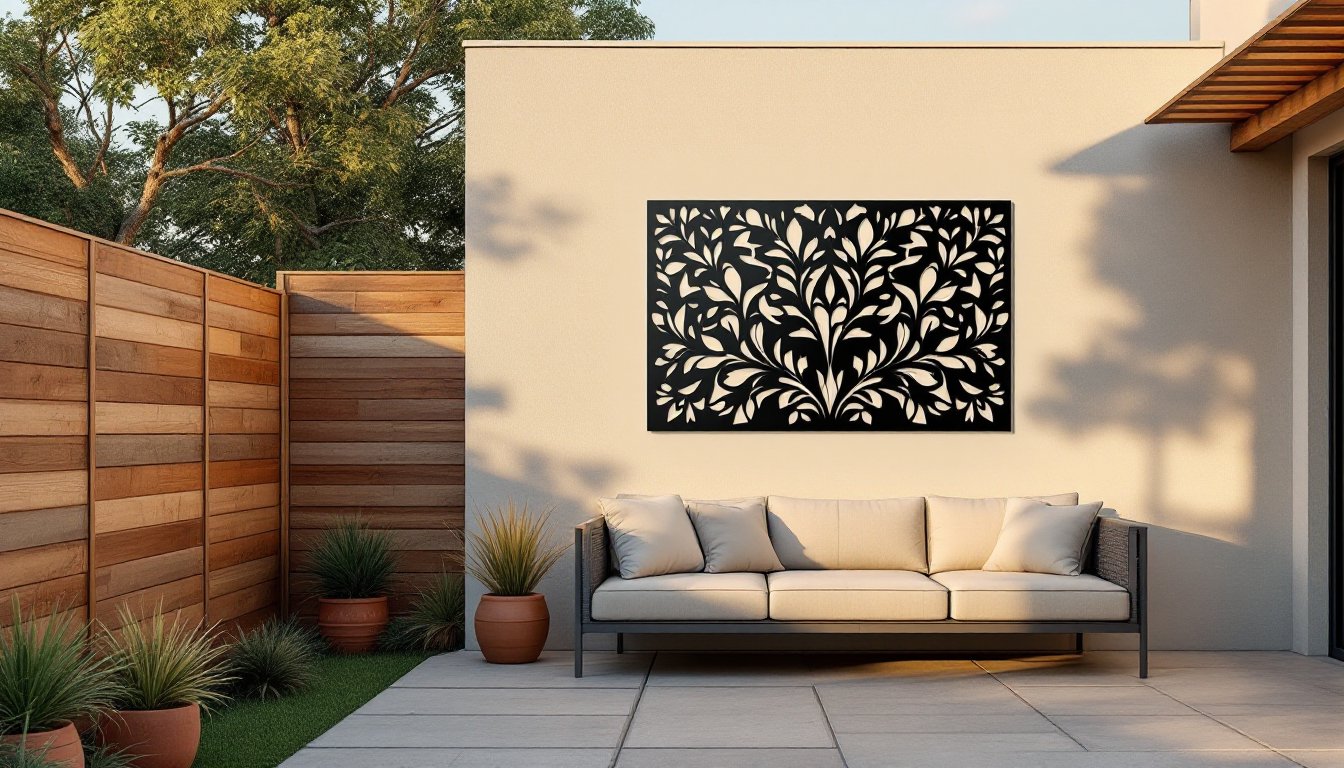

Blank walls on patios, fences, and exterior siding are missed opportunities. Large outdoor wall decor turns forgotten vertical space into focal points that anchor seating areas, break up monotonous surfaces, and add personality without sacrificing square footage. Unlike indoor art, exterior pieces face UV exposure, temperature swings, moisture, and wind load, so choosing the right material and installation method isn’t optional. This guide covers material selection, popular styles, design strategies for different spaces, and practical mounting techniques to help homeowners make informed choices that last.
Key Takeaways
- Large outdoor wall decor in 36-inch-plus sizes creates visual impact that grounds furniture arrangements and defines activity zones on expansive patios and fence lines.
- Metal pieces—particularly powder-coated steel, aluminum, and Corten steel—are the most durable choice for large outdoor wall decor, lasting 10–15 years with minimal maintenance.
- Material selection must account for climate: coastal areas require marine-grade stainless steel, while desert regions need UV-stable finishes to resist temperature swings.
- Proper installation requires locating structural supports (wall studs, fence posts, or masonry backing), using weight-appropriate anchors, and pre-drilling to prevent damage.
- Annual maintenance—rinsing metal pieces, inspecting fasteners, and retightening hardware—prevents corrosion and ensures large outdoor wall decor remains secure and visually striking.
Why Large Outdoor Wall Decor Makes a Statement
Scale matters outdoors. A piece that looks imposing in a living room often disappears on a 12-foot fence or stucco wall exposed to open sky. Large-format decor, typically 36 inches or wider, holds its own against expansive backdrops and creates visual weight that grounds outdoor furniture arrangements.
Well-chosen wall art serves multiple functions. It draws the eye upward, making covered patios and courtyard spaces feel more intentional. It can camouflage problem areas like cracked siding, faded paint, or utility boxes. For narrow side yards or long fence runs, a single bold piece breaks up the tunnel effect better than scattered small accents.
Outdoor decor also signals transition zones. Mounting a metal sculpture above an outdoor dining table or positioning a statement panel near the grill defines activity areas without physical barriers. This visual anchoring works especially well in open-plan yards where furniture alone doesn’t establish clear zones.
Unlike plantings, wall art delivers immediate impact and doesn’t require seasonal maintenance or irrigation access. For renters or homeowners who lack gardening time, it’s a low-commitment way to personalize exterior spaces.
Popular Types of Large Outdoor Wall Art
Metal Wall Sculptures and Panels
Powder-coated steel and aluminum dominate the outdoor wall art market for good reason. Metal withstands temperature extremes, resists warping, and holds detail better than most alternatives. Laser-cut designs, geometric patterns, botanicals, abstract shapes, range from minimalist single-panel pieces to layered compositions with dimensional depth.
Corten steel (weathering steel) develops a stable rust patina that protects the underlying metal while adding warm, earthy tones. It’s popular for modern and industrial aesthetics but will stain adjacent surfaces during the first few weathering cycles. Plan placement accordingly and avoid light-colored masonry or composite decking below.
Wrought iron and cast aluminum scrollwork suits traditional and Mediterranean styles. These pieces often come pre-finished with rust-inhibiting coatings. Check mounting hardware gauge, heavy ornamental ironwork needs lag screws into solid blocking or masonry anchors rated for the weight, not just fence boards.
Oversized Mirrors and Reflective Pieces
Acrylic mirrors designed for outdoor use reflect light and create depth without the weight and breakage risk of glass. They work especially well in narrow courtyards, shaded patios, and north-facing walls that lack natural brightness. Look for UV-stabilized acrylic rated for exterior use, standard indoor mirrors will delaminate and cloud within months.
Positioning matters. Mirrors angled toward plantings or water features amplify greenery and movement. Avoid direct reflection of harsh afternoon sun, which creates glare and uncomfortable hot spots in seating areas.
Polished metal panels, stainless steel, brushed aluminum, copper, offer subtler reflectivity and develop unique patinas over time. Copper shifts from salmon-pink to rich brown to eventual verdigris, a process that takes 5–20 years depending on climate and exposure. These materials cost significantly more than painted finishes but age gracefully without repainting.
Choosing the Right Material for Durability
Climate drives material selection. Coastal environments demand marine-grade stainless steel (316 alloy) or sealed aluminum, salt air corrodes standard steel hardware and welds within a season. Desert regions require UV-stable finishes and materials that tolerate 40°F+ daily temperature swings without cracking.
Wood and composite pieces need annual inspection. Treated lumber, cedar, and teak handle moisture better than pine or MDF, but all wood eventually checks, fades, and attracts insects. Sealed and stained pieces last 5–10 years with maintenance: expect to refinish or replace. Composite wood alternatives (PVC-lumber blends) resist rot and insects but can warp under direct sun without adequate backing support.
Powder-coated finishes outlast paint by years. The electrostatic process bonds pigment to metal at the molecular level, creating a chip-resistant shell. Quality powder coating resists fading and oxidation for 10–15 years in full sun. Budget pieces often use standard spray paint labeled “outdoor”, this flakes and chalks within 2–3 seasons.
Resin and molded plastic pieces work for covered patios but degrade quickly under direct UV. They’re lightweight and inexpensive but rarely justify the replacement cycle. If cost is the primary driver, prioritize a smaller metal piece over a larger plastic one.
Weight and wind load matter. Lightweight panels (under 10 pounds) mounted on privacy fences can catch wind and stress fasteners, leading to loosening or tearing. Add backing washers and use vibration-resistant fasteners (nylon-insert lock nuts or thread-locking compound). Pieces over 50 pounds require structural mounting, into wall studs, masonry, or dedicated posts, not just surface fasteners.
Design Ideas for Different Outdoor Spaces
Privacy fences are blank canvases but structurally limited. Standard 5/4×6 or 1×6 fence boards span between posts every 6–8 feet. Mount lightweight art directly to boards with outdoor-rated screws. For heavier pieces (over 15 pounds), locate the 4×4 posts and fasten there, or install a horizontal cleat board across multiple pickets to distribute weight.
Vertical board fences suit vertical art: horizontal plank or shadowbox styles pair better with wide, low-profile pieces that emphasize the fence’s horizontal lines.
Stucco and masonry walls support heavy pieces but require proper anchors. Use sleeve anchors or wedge anchors for solid concrete or CMU (concrete masonry unit) block. For hollow-core block, toggle bolts or masonry screws won’t hold, install through-bolts with backing plates or use expanding anchors designed for hollow substrates. Drilling stucco requires a hammer drill and masonry bit: go slowly to avoid cracking the finish coat.
Match decor scale to wall height. An 8-foot fence looks balanced with 36–48-inch art. A two-story exterior wall (16+ feet) needs 60-inch-plus pieces or grouped compositions to avoid looking like an afterthought.
Covered patios and pergolas offer partial weather protection, expanding material options. Here, rust-prone finishes and natural wood pieces survive longer. Hang decor from overhead beams using heavy-duty screw hooks or eye bolts rated for the load. This approach works well for dimensional pieces and hanging metal sculptures that sway slightly in the breeze, adding movement.
Side yards and alley walls benefit from bold, singular statements. These high-traffic transition zones don’t need complex compositions, one strong focal piece is enough. Bright colors or reflective surfaces help lighten these typically shaded spaces.
Installation and Maintenance Tips
Always check what’s behind the mounting surface. Use a stud finder on exterior walls to locate framing. For fences, a strong magnet detects hidden nails that mark post locations. Never assume even spacing, verify before drilling.
Safety first: Wear safety glasses when drilling overhead or into masonry (chips fly). Use work gloves when handling metal edges, which are often sharp before finishing. For installations above 6 feet, use a stable ladder with a helper to hold pieces during alignment.
Pre-drill all mounting holes to prevent splitting wood and cracking stucco. Match drill bit diameter to the fastener’s shaft (not the threads). For metal-to-wood installations, outdoor-rated deck screws (coated or stainless steel) work well. Metal-to-masonry needs anchors sized to the piece’s weight, most manufacturers list load ratings. Add 50% safety margin for wind-exposed locations.
Leveling matters. Use a 24-inch or 48-inch spirit level for pieces over 36 inches wide. Mark hole locations with a pencil, step back 10 feet, and check visual alignment before drilling. What looks level at arm’s length often reads crooked from seating distance.
Maintenance is minimal but not zero. Rinse metal pieces twice yearly with a hose to remove dust, pollen, and salt buildup. Inspect fasteners annually and retighten if needed, thermal expansion and contraction loosen hardware over time. Touch up powder coating chips immediately with manufacturer-matched paint to prevent underlying corrosion.
Remove and store delicate pieces during severe weather if possible. High winds can turn lightweight panels into projectiles. For permanent installations in hurricane or tornado zones, through-bolt mounting and wind-rated fasteners aren’t optional.
If a piece will mount over painted surfaces, install it before repainting or plan to touch up screw holes. Removing art later often damages finishes. For renters or seasonal decor, consider removable mounting strips rated for outdoor use, though these typically max out around 10–15 pounds per strip set.