
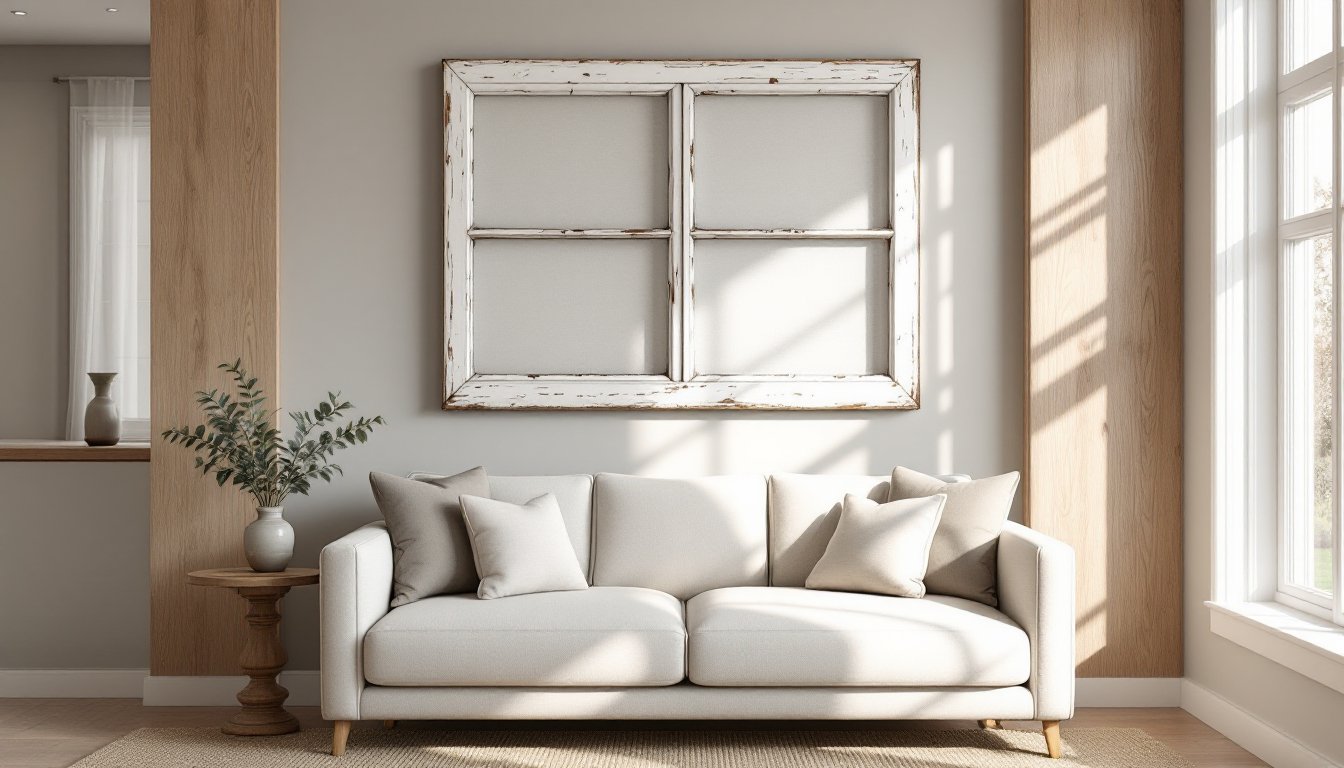

Empty walls can feel awkward, too much blank space and not enough character. Window wall decor solves this by adding architectural interest without major renovations. Whether it’s a salvaged vintage frame, a faux window with mirrors, or a DIY project made from reclaimed materials, these pieces bring dimension and visual weight where a flat wall needs help. Unlike generic art prints, window-inspired designs mimic real architectural elements, tricking the eye into seeing depth, light, or even a view that doesn’t exist. They work especially well in spaces that lack natural light or feel closed in. This guide walks through the main types of window wall decor, installation considerations, and practical DIY options that anyone with basic tools can tackle.
Key Takeaways
- Window wall decor adds architectural interest and visual depth to blank walls without requiring structural changes, permits, or major renovations.
- Vintage and salvaged window frames bring authentic character and patina, but require careful handling regarding lead paint testing, proper weight support, and gentle cleaning to preserve original details.
- Faux window designs using printed backdrops, LED panels, or mirrors create the illusion of space and light, making them ideal solutions for basements and rooms with limited natural light.
- DIY window wall decor projects like building custom frames from lumber or repurposing cabinet doors are achievable with basic carpentry tools and skills, offering cost-effective alternatives to store-bought pieces.
- Proper placement and mounting—positioning frames at eye level, using appropriate anchors for wall type, and maintaining consistent spacing in gallery layouts—ensures both visual impact and structural safety.
- Mirror-backed window frames expand small spaces by reflecting light and views, and work particularly well when positioned opposite actual windows to create visual balance and brightness.
What Is Window Wall Decor and Why It’s Trending
Window wall decor refers to decorative pieces designed to look like windows but mounted on walls purely for visual impact. This includes actual salvaged window frames, reproductions, faux windows with printed or painted backdrops, and mirror inserts that reflect light. The trend has grown as homeowners look for ways to add architectural detail to newer construction that often lacks the molding, trim, and character found in older homes.
Window pane wall decor and window frame wall decor both fall under this category. The difference usually comes down to whether the piece features divided panes (muntins) or a simple frame border. Multi-pane designs tend to read as more traditional or farmhouse, while single-frame styles lean modern or industrial.
The appeal is practical. Real windows require structural openings, headers, and often permits. Wall-mounted versions deliver similar visual interest without cutting into studs or dealing with building codes. They’re also portable, renters can take them along without patching drywall or worrying about landlord approval.
Another reason for the trend: social media and home staging. Rooms that photograph well often have layered textures and focal points. A large window frame breaks up blank wall space and adds vertical or horizontal lines that guide the eye, making rooms feel larger and more intentional.
Vintage and Antique Window Frames as Rustic Wall Art
Salvaged window frames bring instant age and texture. Many come from demolished homes, barns, or historic buildings and carry decades of weathering, peeling paint, warped wood, original wavy glass. This patina is the main appeal: refinishing them defeats the purpose.
When sourcing vintage frames, check for lead paint if the piece predates 1978. Use a test kit before bringing it indoors, especially in homes with children. If positive, either leave it untouched (encapsulated under existing layers) or have it professionally stripped. DIY sanding releases lead dust, which is a serious health hazard.
Weight is another consideration. Older frames are often made from dense hardwoods and single-pane glass. A four-pane window can easily weigh 15–25 pounds. Use appropriate anchors, toggle bolts or screw-in drywall anchors rated for at least double the frame’s weight. If the wall is plaster over lath, pre-drill to avoid cracking. Studs are ideal but not always positioned where the design calls for the frame.
Cleaning old frames requires a light touch. Use a dry brush to remove loose dirt, then wipe with a damp cloth and mild soap. Avoid soaking the wood, which can lift remaining paint or loosen joinery. If the glass is intact and original, leave it, it adds authenticity. Cracked or missing panes can be replaced with new glass, acrylic, or left open for a more airy look.
Styling tips: Lean large frames against a wall on a console table or mantel for a casual look, or mount them horizontally above a sofa or bed to anchor the space. Pair with understated decor, the frame itself should be the star.
Faux Window Designs That Add Depth and Light
Faux windows use printed backdrops, LED panels, or painted scenes to simulate a view. They’re especially useful in basements, interior bathrooms, or rooms with limited natural light. Some designs feature printed landscapes or cityscapes behind panes: others use frosted or textured inserts for privacy-window effects.
Electric faux windows have become more accessible. Backlit LED panels mimic daylight and can be set on timers to follow natural light cycles. These typically require access to an outlet or hardwiring, so plan placement accordingly. If cutting into walls for wiring, check local codes, some jurisdictions require licensed electricians for permanent installations.
Non-electric versions rely on static images or materials. A popular DIY approach: mount a window frame over a canvas print or wallpaper panel depicting sky, trees, or architectural views. The frame adds dimension, and the image provides the illusion of depth. Ensure the image resolution is high enough for the final size, pixelation ruins the effect. Most printing services recommend at least 150 DPI for large-format work.
Another option is painted faux windows. This works best on smooth, primed drywall. Sketch the frame outline with a level and painter’s tape, then use interior latex in semi-gloss or satin for the “frame.” For the panes, apply a softer hue or leave them as negative space. Add highlights and shadows with a small brush to enhance the 3D effect. This is cosmetic work only, no structural changes, and easily painted over if tastes change.
Mirror Window Decor for Small Spaces
Replacing glass panes with mirrors turns window frames into functional decor. Mirrors reflect light and views, making tight spaces feel larger, a trick designers use in narrow hallways, small bedrooms, and powder rooms.
For this project, measure each pane opening carefully. Glass shops or home centers can cut mirrors to size, typically charging by the square foot. Standard mirror thickness is ⅛ inch, which fits most older window frames. Thicker mirrors (¼ inch) provide better reflection quality but may not fit shallow rabbets (the recessed lip that holds the glass).
Installation steps:
- Remove any old glass and glazing putty. Wear gloves and safety glasses, old putty can be brittle, and glass edges are sharp.
- Clean the rabbet with a wire brush and vacuum out debris.
- Apply a thin bead of clear silicone adhesive along the rabbet. Avoid traditional glazing putty with mirrors: some formulas react with the reflective backing and cause black spots.
- Press the mirror into place and secure with glazier points or small brads if the frame allows. Don’t overtighten, mirrors crack under point pressure.
- Wipe away excess silicone with a damp cloth before it cures.
Hanging mirror window decor follows the same rules as any heavy mirror. Use two D-rings on the back, positioned one-third down from the top edge, with picture wire strung between them. Wall anchors must support the combined weight of frame, mirrors, and hardware. Test the wire and hanging method before finalizing placement, dropping a mirrored piece usually means replacing it entirely.
Mirror window frames work especially well opposite actual windows. They bounce natural light deeper into the room and create the illusion of an additional window, which helps balance asymmetrical layouts.
DIY Window Wall Decor Projects You Can Try Today
Building window frame wall decor from scratch is straightforward with basic carpentry skills and a few tools.
Materials for a four-pane frame (24″ × 36″ finished size):
- Four pieces of 1×4 lumber (actual dimensions: ¾” × 3½”) for the outer frame
- Two pieces of 1×2 lumber for interior muntins (crosspieces)
- Wood glue and 1¼” brad nails or pocket screws
- Sandpaper (120 and 220 grit)
- Primer and paint or stain
- Sawtooth hangers or D-rings
Tools needed:
- Miter saw (or miter box and handsaw)
- Tape measure and carpenter’s square
- Drill with pilot bit if using screws
- Brad nailer or hammer and nail set
- Clamps
Steps:
- Cut the 1×4s to length: two at 36″ (top and bottom) and two at 24″ (sides). Miter the ends at 45° for a clean corner join. A miter saw gives the best results, but a miter box works.
- Dry-fit the frame to check angles. Adjust cuts if corners don’t close cleanly.
- Apply wood glue to mitered edges and assemble. Clamp corners and secure with brad nails or pocket screws from the back. Wipe away squeeze-out immediately.
- Measure and cut the 1×2 muntins. For a four-pane layout, cut one horizontal piece to fit between the side rails and one vertical piece to span top to bottom. Glue and nail in place.
- Fill nail holes with wood filler and let dry. Sand the entire frame smooth, starting with 120-grit and finishing with 220-grit.
- Prime with a quality wood primer, especially important if painting white or light colors, as it prevents tannin bleed. Topcoat with two coats of interior latex or acrylic paint.
- Attach hanging hardware to the back. For frames under 10 pounds, sawtooth hangers work fine. Heavier pieces need D-rings and wire.
Variations: Leave the panes open for an airy look, back them with chicken wire for farmhouse style, or insert printed photos or botanical prints behind acrylic sheets.
Another quick project: repurpose old cabinet doors with glass panes. Many have divided lights and existing finishes that only need cleaning and new hardware on the back for hanging.
Styling Tips: Where and How to Hang Window Decor
Placement affects both aesthetics and structural safety. Window wall decor works best on walls with clear sightlines, above a sofa, bed, dining buffet, or in a hallway. Avoid placing large, heavy frames over cribs, desks, or anywhere a fall could cause injury.
Height matters. The center of the frame should sit at eye level, roughly 57–60 inches from the floor. In rooms with tall ceilings, go slightly higher to keep proportions balanced. Over furniture, leave 6–10 inches of clearance between the frame bottom and the furniture top.
For gallery walls or grouped frames, lay out the arrangement on the floor first. Use painter’s tape on the wall to mark positions before committing to anchor holes. Maintain consistent spacing, 2–4 inches between frames reads as intentional: uneven gaps look accidental.
Orient frames to match the wall shape. Horizontal frames widen narrow walls: vertical frames add height to low-ceilinged rooms. In a room with an actual window on one wall, consider placing the decorative frame on the opposite or adjacent wall to create visual symmetry.
Anchoring into studs is always best, but not always practical. If the design calls for off-stud placement, use toggle bolts for drywall or molly bolts for plaster. Test the anchor by pulling down firmly before hanging the frame. A failed anchor usually means a larger hole and more patching.
Lighting can enhance the effect. Picture lights or wall sconces mounted above or beside the frame add drama and emphasize texture. For faux windows with backlighting, dimmers allow control over intensity and mood.
Finally, consider the room’s existing style. Weathered wood frames suit farmhouse or cottage interiors. Clean-lined, painted frames work in modern or Scandinavian spaces. Ornate frames with gilt or dark stain fit traditional or Victorian aesthetics. The window decor should complement, not compete with, existing architectural details.
Conclusion
Window wall decor offers an accessible way to add architectural interest without structural work or permits. Whether using salvaged frames, building custom pieces, or installing faux window designs, the key is proper mounting and thoughtful placement. Match the style to the room, use appropriate hardware for the weight, and don’t skip surface prep if painting or refinishing. With attention to detail and a few basic tools, these projects deliver professional-looking results that transform blank walls into focal points.