
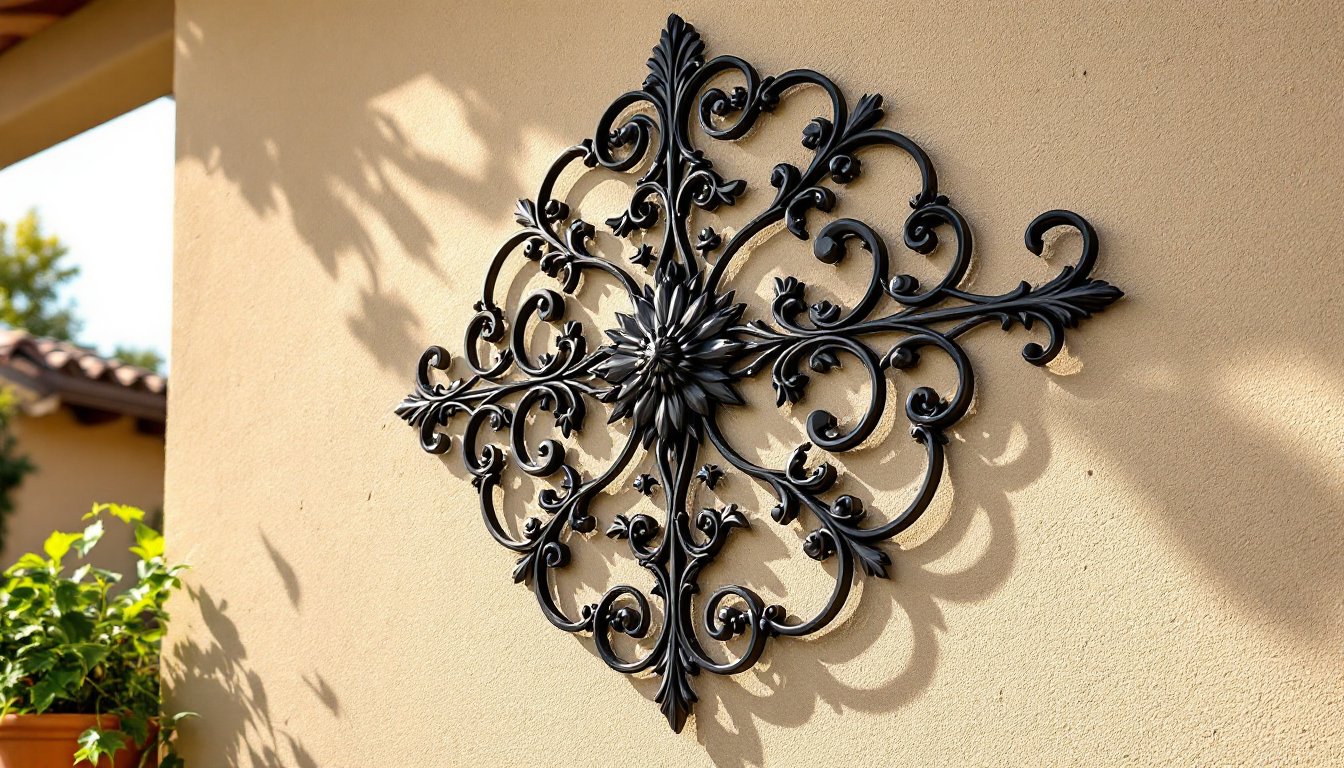

Blank exterior walls are missed opportunities. Whether it’s a plain stucco façade, a stretch of vinyl siding, or a bare fence line, outdoor wall decor adds personality and visual weight to spaces that otherwise fade into the background. Wrought iron wall decor has become a go-to for homeowners looking to elevate outdoor areas with durability and style that holds up season after season. Unlike resin or wood alternatives that crack, fade, or rot, wrought iron weathers the elements while maintaining its structural integrity and classic appeal. It works across design styles, from Old World courtyards to contemporary patios, and requires minimal upkeep once properly installed and finished.
Key Takeaways
- Wrought iron wall decor offers superior durability compared to wood or resin alternatives, lasting decades outdoors without warping, fading, or rotting.
- Wrought iron works across multiple design styles—from Mediterranean scrollwork to modern geometric patterns—while its dark finish complements any exterior material without clashing.
- Proper placement on solid backing (masonry, studs, or masonry anchors rated for wind load) is critical to ensure safety and maximize visual impact on focal walls, patios, and garden areas.
- Low-maintenance outdoor wrought iron requires only annual inspections and gentle cleaning with a soft brush; addressing rust early with a converter, primer, and exterior paint prevents long-term deterioration.
- Outdoor wrought iron doesn’t attract pests or harbor mold, making it an ideal low-maintenance, high-impact solution for transforming blank exterior walls into striking focal points.
Why Choose Wrought Iron for Outdoor Wall Decor
Wrought iron stands out for outdoor use because it’s built to last. The material itself, low-carbon iron that’s been worked (wrought) into shape, has natural tensile strength and corrosion resistance when treated correctly. Modern wrought iron pieces are typically powder-coated or finished with weather-resistant paint, adding a protective barrier against moisture, UV exposure, and temperature swings.
Durability is the primary draw. A well-finished wrought iron piece can last decades outdoors without significant deterioration. Compare that to painted wood (which needs refinishing every few years) or cheap metal alloys that rust through in a single wet season. Wrought iron won’t warp, split, or become brittle from sun exposure.
Weight and stability matter for outdoor installations. Wrought iron has enough heft to stay put in wind without additional bracing, yet it’s not so heavy that it requires structural reinforcement on standard exterior walls. Most pieces can be mounted directly into masonry, wood siding, or stucco using appropriate anchors.
Design versatility is another advantage. Wrought iron can be forged, welded, and shaped into intricate scrollwork, clean geometric forms, or representational designs (botanical motifs, animals, abstract art). The black or dark bronze finish serves as a neutral backdrop that complements brick, stone, painted siding, and stucco without clashing.
From a practical standpoint, wrought iron doesn’t attract pests, won’t become a nesting site for insects, and doesn’t provide the organic material that mold or mildew need to thrive. It’s a low-maintenance, high-impact material that works in full sun, partial shade, or covered outdoor areas like porches and breezeways.
Popular Styles of Outdoor Wrought Iron Wall Art
Wrought iron adapts to a range of design aesthetics, from ornate traditional pieces to minimalist modern forms. Choosing a style depends on the home’s architecture, existing landscaping, and the mood the homeowner wants to create.
Mediterranean and Tuscan Designs
Mediterranean and Tuscan styles emphasize curves, organic forms, and Old World craftsmanship. These pieces often feature:
- Scrollwork and filigree: Spiraling vines, curled leaves, and flowing tendrils that mimic ironwork found on European gates and balconies.
- Sunburst or radial patterns: Circular designs with rays extending outward, sometimes incorporating floral or leaf details at the center.
- Botanical and nature motifs: Grapevines, olive branches, or stylized flowers that tie into the Mediterranean landscape tradition.
These designs work well on stucco, adobe, or stone exteriors and pair naturally with terracotta planters, warm earth-tone paint, and arched doorways. They add dimension to flat surfaces and break up large expanses of wall without overwhelming the architecture.
Installation tip: Mediterranean pieces tend to be larger and heavier. Use masonry anchors (such as sleeve or wedge anchors) rated for the combined weight of the piece plus wind load. Pre-drill holes with a masonry bit, and avoid relying on adhesive-only mounts for anything over 10 pounds.
Modern Geometric Patterns
Contemporary homes and minimalist exteriors call for cleaner lines and abstract forms. Modern wrought iron wall art leans toward:
- Angular compositions: Intersecting lines, asymmetrical grids, and layered planes that create depth through shadow play.
- Minimalist silhouettes: Simple shapes, circles, rectangles, or hexagons, arranged in repeating or staggered patterns.
- Industrial finishes: Matte black, brushed metal, or mixed-material designs that incorporate wood, glass, or weathered steel alongside wrought iron.
These pieces suit homes with horizontal siding, board-and-batten, metal cladding, or smooth stucco. They’re often used in groupings or as part of a gallery wall concept, where multiple smaller pieces are arranged to form a cohesive installation.
Mounting consideration: Geometric pieces may have fewer attachment points than scrollwork designs. Use toggle bolts for hollow walls (vinyl or wood siding over sheathing) or structural screws into studs where possible. For masonry, concrete screws (like Tapcon) work well for lighter geometric panels.
Best Placement Ideas for Maximum Impact
Placement makes or breaks outdoor wall decor. Wrought iron works best where it enhances existing features rather than competes with them.
Focal walls and entryways are prime spots. Hanging a large piece above or beside a front door draws the eye and adds vertical interest. It frames the entrance without crowding the space, keep at least 6–8 inches of clearance between the decor and door trim to avoid a cluttered look.
Covered porches and patios provide some weather protection while still offering visibility. Wrought iron mounted on the back wall of a porch or the exterior wall of a covered patio creates an outdoor “room” feel. Pair it with hanging plants, outdoor lighting, or seating to build a cohesive scene.
Bare fence sections benefit from wrought iron accents, especially along privacy fences where a long, unbroken stretch of wood or vinyl can feel monotonous. Mount smaller pieces at intervals or use a single statement piece as a centerpiece. Make sure the fence structure is sound, wrought iron adds weight, and a leaning or rotted fence won’t support it safely.
Garden walls and retaining walls made of stone, brick, or poured concrete are ideal substrates. The rough texture contrasts beautifully with the smooth, dark finish of wrought iron. Position pieces where they’re visible from seating areas or pathways, and consider uplighting or solar spotlights to highlight them after dark.
Avoid placement mistakes:
- Don’t mount wrought iron in areas with constant water exposure (directly under roof drips, behind sprinkler spray zones) without regular maintenance. Even powder-coated finishes can fail over time with persistent moisture.
- Skip mounting on flimsy materials like thin vinyl siding or T1-11 plywood without backing. Wrought iron needs solid support, find studs, use blocking, or mount directly to masonry.
- Consider sightlines. A beautiful piece hidden behind overgrown shrubs or furniture is wasted. Trim back plants seasonally and plan furniture layouts that don’t obstruct the decor.
Proportion matters. A 12-inch piece on a 20-foot wall looks lost. Aim for decor that spans roughly one-third to one-half the width of the wall section you’re dressing. For groupings, maintain consistent spacing (4–6 inches between pieces) and align them along a horizontal or vertical axis for a polished look.
Maintenance Tips to Keep Your Wrought Iron Decor Looking New
Wrought iron is low-maintenance, but it’s not maintenance-free. Routine care prevents rust, preserves finishes, and extends the life of the piece.
Regular cleaning is the simplest task. Once or twice a year, spray down the decor with a garden hose to remove dust, pollen, and cobwebs. For stubborn grime, use a soft-bristle brush and a mix of mild dish soap and water. Rinse thoroughly and let air-dry. Avoid pressure washers, they can strip protective coatings and drive water into crevices.
Inspect for rust annually, especially in humid or coastal climates. Look for orange or brown spots, flaking paint, or bubbling finishes. Catch rust early, and it’s a quick fix. Ignore it, and it spreads.
Rust repair process:
- Remove loose rust with a wire brush or fine-grit sandpaper (80–120 grit). Wear safety goggles and a dust mask to avoid inhaling iron oxide particles.
- Treat with a rust converter if rust has penetrated the metal. These products chemically neutralize rust and create a paintable surface.
- Prime bare metal with a rust-inhibiting primer formulated for exterior metal (look for products with zinc or iron oxide pigments).
- Topcoat with exterior metal paint or a matching powder-coat spray. Apply two thin coats rather than one heavy coat to avoid drips.
Protective measures extend the time between refinishing:
- Apply a clear coat (spar urethane or exterior polyurethane) over painted finishes every 2–3 years for added UV and moisture resistance.
- Keep vegetation trimmed back so leaves and branches don’t trap moisture against the metal.
- Remove snow and ice buildup in winter climates. Salt spray from roads or sidewalks accelerates corrosion, rinse wrought iron after winter storms if you’re in a salted area.
When to call a pro: If wrought iron is mounted on a two-story wall or requires a ladder setup beyond a homeowner’s comfort level, hire a handyman or painting contractor for maintenance. Safety trumps DIY every time. Similarly, if rust has caused structural damage (thinning metal, broken welds, or compromised mounting points), replacement or professional welding may be necessary.
Conclusion
Wrought iron wall decor offers a durable, stylish solution for outdoor spaces that need visual interest and long-term performance. Whether it’s ornate Mediterranean scrollwork or sleek modern geometry, the material adapts to diverse design preferences while standing up to weather, pests, and time. Proper installation on solid backing and routine maintenance, cleaning, rust checks, and occasional touch-ups, keep these pieces looking sharp for years. With thoughtful placement and care, wrought iron transforms blank walls into focal points that enhance curb appeal and outdoor living areas alike.