
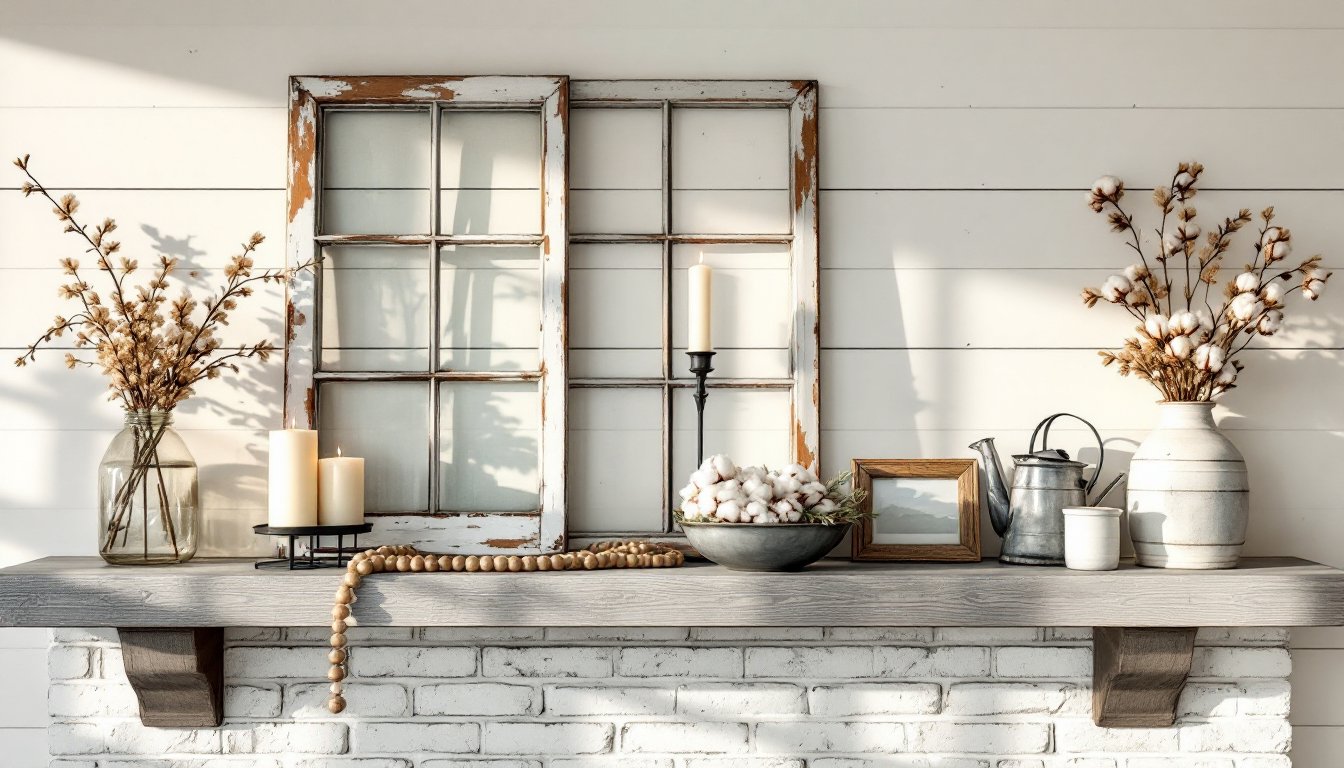

A fireplace mantel serves as architectural punctuation in a room, a horizontal shelf demanding attention whether there’s a fire crackling below or not. Farmhouse mantel decor capitalizes on that visual weight by balancing rustic texture, found objects, and deliberate asymmetry. Unlike formal mantels crowded with matching candlesticks or overdone seasonal themes, the farmhouse approach favors authenticity: weathered wood, salvaged metal, and items that look like they’ve earned their place through use rather than a shopping spree. This style works equally well on original brick hearths, drywall surrounds, or even faux mantels installed purely for display. The key lies in understanding a few core principles and knowing when to stop adding.
Key Takeaways
- Farmhouse mantel decor emphasizes authenticity through weathered wood, salvaged metals, and imperfect pieces that feel collected over time rather than perfectly matched.
- Successful farmhouse mantel styling requires layering with varied heights and textures while leaving roughly one-third of the surface as negative space to avoid clutter.
- Natural materials like reclaimed barn wood, vintage enamelware, and genuine antiques serve as anchors, with quality reproductions helping keep costs manageable without sacrificing style.
- An asymmetrical off-center anchor piece (such as a mirror or large sign) creates visual foundation while odd-numbered groupings and overlapping items add depth and movement.
- Common mistakes include overcrowding the display, using items that are too small in scale, centering everything symmetrically, and ignoring fire safety clearances for functional fireplaces.
- Seasonal updates to farmhouse mantels work best when you swap only small accents like greenery and fillers while keeping the core anchor, wood pieces, and neutral vessels in place year-round.
What Defines Farmhouse Mantel Style?
Farmhouse mantel decor borrows from agricultural roots and pre-industrial aesthetics, emphasizing function over frill. The style centers on natural materials, unpainted wood, galvanized metal, stone, and linen, combined with a muted color palette of whites, grays, blacks, and earth tones. Pops of greenery (real or high-quality faux) soften harder elements.
Unlike minimalist design, farmhouse mantels embrace layering and texture. A single vase won’t cut it: the look requires depth created by overlapping frames, leaning signs, and staggered heights. But, every item should feel purposeful. A rusted pulley isn’t just rustic, it’s a conversation piece with history, real or implied.
Authenticity matters more than perfection. Farmhouse style celebrates imperfection: chipped paint, uneven patina, mismatched frames. A hand-lettered sign with wobbly spacing often reads more genuine than machine-cut vinyl. This aesthetic rejects the matchy-matchy approach of traditional decor, favoring collected-over-time charm instead.
Scale plays a critical role. Mantels typically sit 54 to 60 inches above finished floors (per IRC R1001.11 for fireplace clearances), making them eye-level focal points. Decor needs enough visual mass to hold that space without overwhelming it. A six-inch candlestick gets lost: a 24-inch wooden dough bowl anchors the display.
Essential Elements for Farmhouse Mantel Decor
Natural Wood and Reclaimed Materials
Wood anchors nearly every farmhouse mantel. Reclaimed barn wood, weathered fence boards, or salvaged architectural fragments bring instant age and character. A chunky wooden beam propped vertically against the wall or a vintage wooden toolbox lying on its side provides structure for the arrangement.
When sourcing reclaimed lumber, check for protruding nails, splinters, or rot. Sand rough edges lightly, enough to prevent snags but not so much that the piece loses its worn appeal. If the wood came from an old barn or exterior structure, let it acclimate indoors for a week to prevent warping from humidity changes.
Wooden bowls, breadboards, and cutting boards work as versatile props. A dough bowl filled with seasonal stems or left empty showcases the wood grain. Wooden bead garlands (typically 1 to 2 inches in diameter per bead) drape naturally and add rhythm without color.
Avoid new wood stained to look old unless you’re working with a tight budget. The grain and wear patterns rarely match authentic vintage pieces, and experienced eyes spot the difference immediately.
Vintage and Antique Accents
Authentic or reproduction vintage items inject personality. Common choices include:
- Enamelware pitchers (white with black or cobalt trim)
- Galvanized buckets or watering cans (check for rust-through on the bottom if using for live plants)
- Old windows or mirrors with chippy paint (ensure the glass is secure: re-glaze loose panes)
- Ironstone or stoneware crocks in various sizes
- Antique scales, pulleys, or farm tools mounted or leaning
When shopping flea markets or estate sales, inspect items for stability. A wobbly pitcher filled with stems becomes a tipping hazard. If a piece is structurally unsound but visually perfect, consider it display-only and position it where it won’t be bumped.
Mix true antiques with quality reproductions to control cost. A $15 reproduction enamel pitcher pairs convincingly with a $60 authentic crock. The key is avoiding anything that looks plasticky or machine-perfect.
How to Layer Your Farmhouse Mantel Display
Layering creates depth and keeps the eye moving. Start with the largest anchor piece off-center, typically a mirror, framed sign, or large piece of art. Leaning it against the wall rather than hanging creates casual farmhouse energy. If hanging, use appropriate anchors for the wall type: toggle bolts for drywall, masonry anchors for brick.
Next, add height variation using candlesticks, bottles, or stacked books on one or both sides of the anchor piece. Vary heights in odd numbers (groups of three or five read more dynamic than pairs). A tall taper candle (10 to 12 inches) next to a squat pillar (4 to 6 inches) creates visual interest.
Introduce horizontal elements to balance vertical ones: a wooden beam laid flat, a garland draped loosely, or a long tray corralling smaller items. Trays (wood or galvanized metal) organize clutter and define zones within the display.
Overlap items slightly. Let a small frame lean in front of a larger one, or tuck greenery behind a pitcher. This layered depth prevents the flat, lineup look of items spaced evenly across the mantel.
Leave negative space. Farmhouse style isn’t about filling every inch. A stretch of bare mantel between groupings gives the eye rest and keeps the display from reading as clutter. Aim for roughly one-third of the mantel surface to remain visible.
Secure top-heavy or tipsy items with museum putty (removable adhesive) on the base, especially in homes with kids, pets, or earthquake risk. Test stability by gently bumping the mantel: nothing should topple.
Seasonal Farmhouse Mantel Ideas
Farmhouse mantel decor ideas adapt to seasons without requiring a complete overhaul. Maintain the core structure, anchor piece, candlesticks, and a few neutral elements, and swap seasonal accents.
Spring: Fresh or faux greenery in muted tones (eucalyptus, lambs ear, olive branches). A galvanized bucket with white tulips or a wire basket of moss-covered eggs keeps it subtle. Avoid pastels unless heavily muted: farmhouse leans neutral.
Summer: Wheat stalks, cotton stems (real or faux), or a simple linen runner draped casually. A wooden sign with a low-key phrase or a collection of ironstone in varying heights works year-round but feels summery with added greenery.
Fall: Dried hydrangeas, small pumpkins (white, cream, or muted orange), and pheasant feathers. A dough bowl filled with mini gourds or a galvanized tray holding pillar candles and acorns stays firmly in farmhouse territory. Skip anything overly orange or glittery.
Winter: Evergreen clippings (real cedar or faux), white berries, and pillar candles in hurricane glass. A wooden or metal star, vintage skates hung from jute twine, or a simple pinecone-filled crock transitions the mantel without screaming Christmas. If celebrating holidays, stick to natural materials and cream-colored accents.
Swap small items only, the greenery, filler in bowls, or a single seasonal sign. The base layer (wood pieces, larger frames, neutral vessels) stays constant. This approach saves time, money, and storage space.
Common Mistakes to Avoid When Decorating Your Mantel
Overcrowding: More stuff doesn’t equal better style. If you can’t see the mantel surface or wall behind the display, pull items back. Start with fewer pieces than you think you need, step back, then add selectively.
Ignoring scale: Tiny items disappear on a standard mantel. Use pieces with enough visual weight to register from across the room. A 4-inch vase reads as clutter: a 10-inch pitcher holds its own.
Everything centered and symmetrical: Farmhouse style thrives on asymmetry. Off-center groupings and varied heights feel more collected and less staged. Save perfect symmetry for formal styles.
Skipping the anchor piece: Without a large focal element (mirror, art, or sign), the display lacks a visual foundation. Smaller items float without context. The anchor doesn’t have to be expensive, even a large salvaged window frame works.
Using fire-unsafe materials too close to the firebox: If the fireplace is functional, maintain required clearances. The National Fire Protection Association (NFPA 211) and local codes specify combustible material distances from fireplace openings. Dried greenery, paper, and untreated wood should stay well clear of active fires. For gas fireplaces, check the manufacturer’s guidelines, some surrounds get surprisingly hot.
Fake patina that looks fake: Distressing new items with sandpaper and paint often results in obviously artificial wear. If going the DIY route, study authentic aged pieces to understand where paint naturally chips (edges, high-touch areas) and where it doesn’t (random gouges in the middle of a flat surface).
Forgetting about proportion with the room: A massive mantel display in a small room overwhelms the space. Conversely, a sparse mantel in a large room with high ceilings disappears. Step back and view the mantel in context, not in isolation. The display should feel like part of the room, not a separate vignette demanding all the attention.