
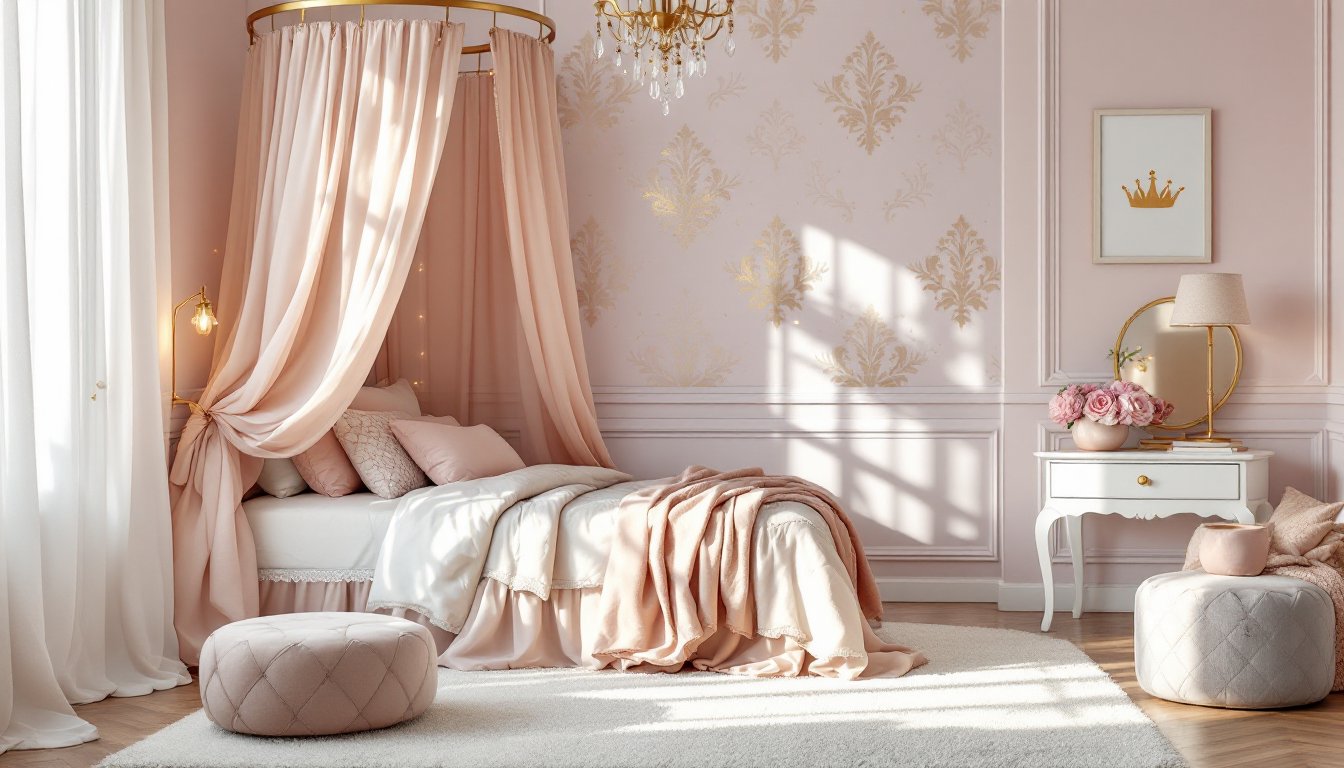

Turning a plain bedroom into a princess-worthy sanctuary doesn’t require a castle, just smart material choices, thoughtful color coordination, and a handful of DIY-friendly upgrades. Whether it’s for a toddler transitioning out of a crib or a tween who still loves the fairy-tale aesthetic, girly princess bedroom decor blends whimsy with function. This guide walks through the practical side of creating that look: which paint finishes hold up best, how to source affordable canopy hardware, and where to invest versus where to improvise. No vague mood boards, just real techniques for building a room that feels magical and holds up to daily use.
Key Takeaways
- Girly princess bedroom decor thrives on soft, flexible color palettes like blush pink, lavender, and mint with satin or eggshell paint finishes that resist staining and maintain an airy feel.
- A canopy bed serves as the room’s centerpiece and requires secure ceiling-mounted installation using properly rated anchors or hooks attached to joists, not drywall alone.
- Layered lighting with a statement ceiling fixture, battery-operated fairy lights, and dimmer switches creates both enchantment and functionality without safety risks.
- Budget-friendly DIY projects like painted thrift-store furniture, peel-and-stick wallpaper accent walls, and fabric canopies using hula hoops deliver princess-worthy results for under $15–30 per item.
- Durable textiles including 100% cotton bedding with 200–400 thread count, blackout-lined curtains, and machine-washable pillow covers ensure the princess theme withstands daily use and frequent washing.
- Secure all heavy wall décor and furniture to studs with proper anchors rated for weight, and prioritize child safety by anchoring tall pieces and eliminating tripping hazards.
Choosing the Perfect Color Palette for a Princess Bedroom
Start with a base color that allows flexibility as tastes evolve. Soft blush pink, lavender, mint, or pale gold are classic princess hues that pair well with white trim and don’t overwhelm a small room. For walls, use a satin or eggshell finish, these are easier to wipe down than flat paint and reflect just enough light to keep the space feeling airy.
If painting all four walls feels like too much commitment, consider an accent wall behind the bed in a deeper shade or a subtle tone-on-tone stencil pattern (think damask or quatrefoil). Use painter’s tape and a small foam roller for crisp edges. A single gallon of quality interior latex covers roughly 350-400 square feet, so one gallon usually handles an accent wall in a standard 10×12 bedroom.
Modern princess bedroom decor often leans into softer neutrals, ivory, champagne, dusty rose, with metallic accents in gold or rose gold. This approach ages better and transitions smoothly if the princess phase shifts. Pair the wall color with white or cream trim in semi-gloss for easy cleaning and a polished look. If the existing trim is dark wood, a coat of primer (oil-based for adhesion over stain) followed by two coats of semi-gloss can make a dramatic difference in brightness.
Essential Furniture Pieces to Create a Regal Look
The bed is the room’s centerpiece. A canopy bed frame or a standard twin/full with an aftermarket canopy kit instantly delivers that royal vibe. Many kits use a ceiling-mounted hook plate (similar to a plant hook) and lightweight PVC or metal hoops draped with sheer fabric. Locate ceiling joists with a stud finder before drilling: drywall anchors alone won’t support fabric weight plus any tugging from a child. If the ceiling is plaster or the room has a textured finish, toggle bolts rated for at least 50 lbs provide better hold.
Beyond the bed, keep furniture proportional. A small upholstered bench or storage ottoman at the foot of the bed adds seating without crowding the floor. Look for pieces with solid wood frames, particle board can sag under regular use. A compact vanity table (even a wall-mounted floating shelf with a mirror) encourages imaginative play and keeps hair accessories organized.
Nightstands don’t need to match perfectly. Mismatched vintage pieces painted in coordinating colors (using chalk paint or latex with a topcoat of polycrylic) add character. One drawer and a lower shelf provide enough storage for a lamp, books, and a water cup. Avoid tall, top-heavy furniture in rooms for younger children: anchor dressers and bookcases to wall studs with furniture straps per current safety standards.
Magical Lighting Ideas That Add Sparkle and Charm
Layered lighting makes a princess bedroom functional and enchanting. Start with a statement ceiling fixture, a chandelier or flush-mount with crystal or acrylic details. Many affordable options use LED candelabra bulbs (E12 base, 40W equivalent) that stay cool and last years. Check the fixture’s weight and the electrical box rating: standard plastic boxes support up to 50 lbs, but heavier chandeliers need a metal fan-rated box. If swapping fixtures feels beyond comfort level, an electrician’s rough-in visit costs less than fixing a fallen chandelier.
Add string lights or fairy lights for ambient glow. Battery-operated LEDs eliminate the need for outlets near the bed (a plus for safety). Drape them along the canopy frame, around a mirror, or inside a sheer fabric tent. Use small adhesive cable clips to keep cords tidy and prevent tripping hazards.
Table lamps on nightstands should have stable, weighted bases, ceramic or resin works better than lightweight plastic. A dimmer switch on overhead lighting (about $15-25 for a basic residential dimmer, compatible with LED bulbs) gives control over brightness for bedtime routines. Always turn off power at the breaker before replacing switches, and use a voltage tester to confirm the circuit is dead.
Wall Decor and Accent Features for a Royal Touch
Wall decor sets the tone without permanent commitment. Peel-and-stick wallpaper in damask, floral, or subtle glitter patterns can cover one accent wall in an afternoon. It adheres best to smooth, primed drywall: textured or freshly painted walls (allow 30 days cure time) can cause bubbling. Measure the wall height and width, add a few inches for trimming, and use a smoothing tool or credit card to work out air pockets as you apply.
Crown molding adds architectural elegance. Pre-primed MDF or pine molding in a simple profile (2-3 inches tall) is beginner-friendly. Cut inside and outside corners at 45-degree angles using a miter saw or miter box with a hand saw. A brad nailer speeds installation, but finish nails and a hammer work fine, just predrill to avoid splits. Fill nail holes with spackling compound, sand smooth, and touch up with semi-gloss trim paint.
Hang framed prints, mirrors, or a fabric canopy crown (a half-round shelf that mounts above the bed with fabric draping down). Use picture-hanging strips for lightweight frames or traditional picture hangers rated for the frame’s weight. For anything over 10 lbs, find a stud or use a drywall anchor appropriate to the wall type (plastic expansion anchors for drywall, sleeve anchors for concrete or brick).
Textiles and Bedding That Complete the Princess Theme
Bedding makes the biggest visual impact per dollar spent. Start with a fitted sheet, flat sheet, and duvet cover in coordinating colors, solids in blush, lavender, or white work as a neutral base. Layer with a quilted coverlet or faux fur throw for texture. Look for 100% cotton or cotton-blend fabrics with a thread count between 200-400: higher isn’t always better for kids’ bedding, which needs frequent washing.
Add decorative pillows in varying shapes, round, heart-shaped, or bolster styles, but keep the bed functional. Too many pillows become a nightly chore. Pillow shams that match the duvet streamline the look. Choose fabrics that are machine-washable: avoid dry-clean-only unless the child is older and less prone to spills.
Curtains frame the windows and control light. Blackout-lined panels in sheer organza or satin-look polyester maintain the princess aesthetic while supporting sleep. Mount curtain rods 4-6 inches above the window frame and extend them several inches beyond each side to make windows appear larger. Use drywall anchors or toggle bolts if studs aren’t positioned conveniently. A coordinating bed skirt hides under-bed storage bins and adds a finished touch, choose one that clears the floor by about 1 inch for easy vacuuming.
Budget-Friendly Princess Decor Tips and DIY Ideas
Plenty of princess-worthy details cost little and require minimal tools. DIY canopy drapes can be made from sheer curtain panels (about $8-15 per panel at discount home stores) and a embroidery hoop or hula hoop spray-painted gold. Hang the hoop from a ceiling hook, drape fabric through, and let it cascade down the sides of the bed. Use fabric glue or a few hand stitches to secure gathers.
Painted furniture transforms thrift-store finds. Sand surfaces lightly with 120-grit sandpaper, apply a coat of bonding primer, then two coats of latex or chalk paint. Seal with water-based polycrylic (satin or matte finish) for durability. Add new drawer pulls, crystal-look knobs or brass handles, for an instant upgrade. A bag of ten knobs runs $15-30 online.
Create wall art using inexpensive frames, scrapbook paper, and vinyl letter stickers for custom quotes or the child’s name. Foam crown molding (often sold as ceiling trim) can be cut, painted, and mounted above the bed as a decorative headboard. Use a miter box for clean 45-degree corners and attach with construction adhesive or finishing nails.
Rugs define the space without the commitment of new flooring. A plush area rug in a soft pink or cream (at least 5×7 feet for a twin bed setup) cushions bare feet and muffles sound. Secure edges with rug tape or a non-slip pad to prevent trips. Shop end-of-season sales or online marketplaces for deals, quality synthetic fibers clean easier than natural wool in high-traffic kids’ rooms.
Conclusion
Building a girly princess bedroom means balancing charm with durability. Choose washable fabrics, secure heavy items to studs, and layer details that can grow or change with the child. With thoughtful material selection and a few solid DIY techniques, any room can become a royal retreat that’s as practical as it is magical.