
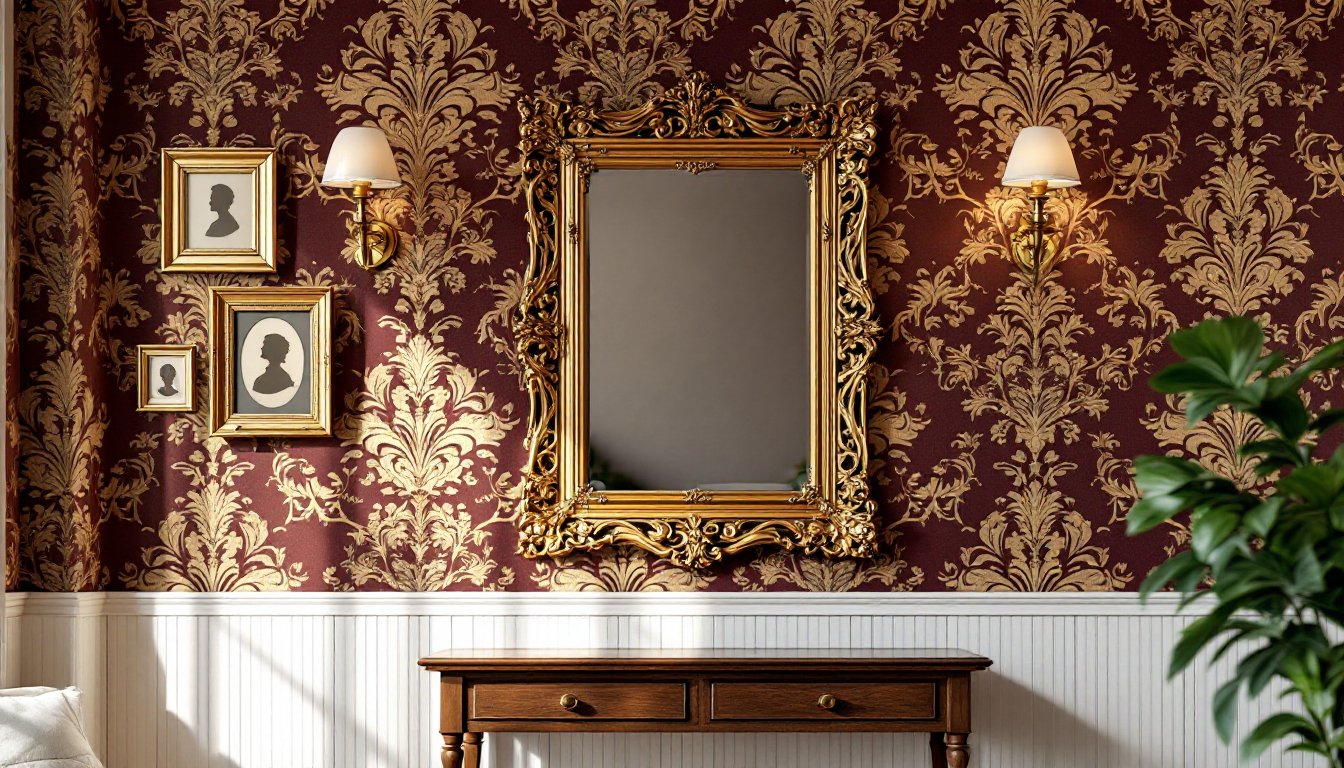

Victorian wall decor brings a sense of history, craftsmanship, and visual drama that few other styles can match. Originating from the mid-to-late 1800s during Queen Victoria’s reign, this aesthetic layers ornate details, rich textures, and statement pieces to create walls that feel curated rather than empty. Today’s homeowners don’t need to commit to a full period restoration to enjoy the look, strategic use of Victorian elements can add warmth and character to both traditional and eclectic interiors. This guide walks through what defines the style, which pieces work best in modern spaces, and how to source and install them without turning a room into a museum.
Key Takeaways
- Victorian wall decor combines ornate details, rich textures, and statement pieces like gilded mirrors and damask wallpaper to add historical character to modern homes without requiring a full renovation.
- Define your Victorian aesthetic with deep saturated colors (burgundy, forest green, navy), natural motifs, and textured surfaces such as embossed panels and floral patterns.
- Use restraint when styling Victorian wall decor by selecting one or two focal elements per room and balancing ornate pieces with clean lines to avoid visual chaos.
- Install heavy ornate mirrors securely by locating wall studs, using heavy-duty anchors rated for 1.5x the weight, and employing a French cleat for pieces over 30 lbs.
- Source Victorian wall decor from antique shops for authentic period pieces, architectural salvage yards for reclaimed materials, or reproduction suppliers for budget-friendly lightweight alternatives.
- Enhance your Victorian wall design with period-appropriate lighting like wall sconces with fabric shades and dimmable LED bulbs in warm white (2700K) to recreate the era’s signature glow.
What Defines Victorian Wall Decor?
Victorian wall decor reflects the era’s fascination with ornamentation, natural motifs, and layered design. Unlike minimalist or mid-century styles that celebrate restraint, Victorian interiors embraced abundance, patterned wallpapers, heavy moldings, picture rails, and densely hung art collections.
Key characteristics include deep, saturated colors (burgundy, forest green, navy, gold), textured surfaces (flocked wallpaper, embossed panels, fabric wall coverings), and natural imagery (florals, vines, birds, botanical prints). Walls were never bare: they featured wainscoting, chair rails, picture molding, and dado rails to divide surfaces into distinct zones.
Materials matter. Authentic Victorian decor used plaster medallions, carved wood trim, and cast iron or brass hardware. Reproductions often substitute lighter-weight polyurethane or resin, which can work well for DIY installations but won’t have the same heft or aging characteristics as original materials.
Understanding these elements helps homeowners distinguish between Victorian-inspired accent pieces and full Victorian immersion. Most modern projects cherry-pick a few signature details rather than replicating every layer.
Popular Victorian Wall Decor Elements for Modern Homes
Ornate Mirrors and Gilded Frames
Oversized mirrors with carved wood or plaster frames are one of the easiest ways to inject Victorian character. Look for frames with acanthus leaf scrollwork, floral garlands, or shell motifs, all common Victorian design elements. Gilt finishes (gold or silver leaf) were popular, though many reproductions use metallic paint or gold wax over a base coat.
When hanging a heavy ornate mirror (often 20-40 lbs), locate wall studs using a stud finder and use appropriate hardware. For drywall, use heavy-duty wall anchors rated for at least 1.5x the mirror’s weight. Picture wire alone isn’t enough, install D-rings on the frame’s vertical stiles and use a French cleat for pieces over 30 lbs. This distributes weight evenly and prevents the frame from tilting forward.
Gilded picture frames work similarly well. Group smaller frames in a salon-style arrangement, mixing portraits, botanical prints, and silhouettes. Leave 2-3 inches between frames for a curated, lived-in look rather than a rigid grid.
Damask Wallpaper and Wall Panels
Damask patterns, reversible, tone-on-tone jacquard weaves, are quintessentially Victorian. Modern wallpapers mimic the look with printed or embossed vinyl, which is far easier to install than traditional fabric wall coverings.
Before hanging wallpaper, prep the wall surface: fill holes with spackle, sand smooth, and apply a primer-sealer (especially over fresh drywall or bold paint colors). Wallpaper adhesive won’t bond well to glossy or textured paint. For peel-and-stick options, the wall must be clean and dust-free.
Measure from ceiling to baseboard and add 4 inches for trimming. Damask patterns often have a vertical repeat (the distance before the pattern repeats), typically 18-36 inches. Plan the first strip to center a prominent motif at eye level. Use a plumb line or laser level to ensure the first strip is perfectly vertical, subsequent strips will follow that line.
Beadboard wainscoting or picture frame molding also evokes the Victorian era. Install wainscoting to 32-36 inches high (standard chair rail height), using construction adhesive and 18-gauge brad nails into studs. Paint it in a contrasting color to the upper wall for classic two-tone Victorian wall decor. Picture frame molding, thin strips of trim arranged in rectangles, adds architectural interest without the bulk of wainscoting. Miter corners at 45 degrees using a miter saw or miter box for clean joints.
How to Style Victorian Wall Decor Without Overwhelming Your Space
The biggest mistake with Victorian decor is attempting every layer at once. In a modern home, restraint is key.
Pick one or two focal elements per room. If the room has ornate wallpaper, keep frames simple. If the walls are painted, go bold with a large gilded mirror or a gallery wall of vintage prints. Mixing too many patterns (damask wallpaper + floral drapes + busy upholstery) creates visual chaos rather than elegance.
Balance ornate pieces with clean lines. Pair a carved wood mirror with a streamlined console table. Use Victorian wall panels in a hallway but keep adjacent rooms neutral. This approach prevents the space from feeling like a historical reenactment.
Stick to a cohesive color palette. Victorian interiors used rich, dark hues, but modern interpretations can lighten the palette, charcoal instead of black, dusty rose instead of burgundy, sage instead of hunter green. Metallics (brass, bronze, aged gold) tie disparate elements together.
Control the scale. A single oversized mirror or a statement wallpaper accent wall has more impact than a dozen small, competing pieces. In smaller rooms, limit victoria wall decor to one wall to avoid a cramped feel.
Don’t forget lighting. Victorian homes had gas lamps and candles, creating warm, low lighting. Modern reproductions include wall sconces with fabric shades or brass picture lights mounted above framed art. Dimmable LED bulbs in warm white (2700K) mimic the glow of period lighting without the fire hazard.
Where to Find Authentic and Reproduction Victorian Wall Pieces
Sourcing Victorian wall decor depends on budget, authenticity preference, and DIY skill level.
Antique shops and estate sales offer genuine period pieces, plaster medallions, carved wood frames, original gilt mirrors. Expect to pay a premium, and plan on restoration work. Old plaster may be chipped: gilt may be flaking. Repairs require wood filler, fine-grit sandpaper (220-grit), and gold leaf or metallic wax for touch-ups. If the piece has structural damage, consult a restoration specialist before attempting repairs.
Architectural salvage yards carry reclaimed trim, moldings, and hardware. These pieces have authentic patina but may need cleaning and stabilization. Check for lead paint on pre-1978 items: test kits are available at hardware stores. If lead is present, either have it professionally stripped or seal it with an encapsulant primer.
Reproduction suppliers (both online and specialty home decor retailers) sell polyurethane or resin versions of Victorian elements, ceiling medallions, corbels, appliqués, and trim. These are lightweight, pre-primed, and easy to install with construction adhesive and finish nails. They won’t have the same aging or detail as authentic pieces, but they’re budget-friendly and beginner-friendly.
Wallpaper retailers offer Victorian-inspired patterns in modern materials. Peel-and-stick options simplify installation and removal, ideal for renters or commitment-phobes. Traditional pre-pasted or unpasted wallpapers provide more design choices and a higher-end look.
DIY and paint stores stock picture frame molding, chair rail, and wainscoting kits. Standard 1×2 or 1×3 pine boards work for picture frame molding: cut and miter them yourself to save on labor. Paint with semi-gloss or satin finish for durability and a subtle sheen that mimics period trim.
When comparing options, consider installation complexity. Authentic plaster medallions require toggle bolts and possibly a helper: lightweight foam reproductions can go up solo with adhesive. Weigh authenticity against practicality for the project at hand.
Conclusion
Victorian wall decor offers a way to add depth, texture, and historical character to modern interiors without requiring a full renovation. By selecting a few key elements, an ornate mirror, a damask accent wall, or picture frame molding, and balancing them with cleaner contemporary pieces, homeowners can capture the style’s elegance without the heaviness. Proper installation techniques, from stud-finding for heavy mirrors to priming walls for wallpaper, ensure these decorative upgrades last. Whether sourcing antiques or using lightweight reproductions, the goal is the same: walls that tell a story.