
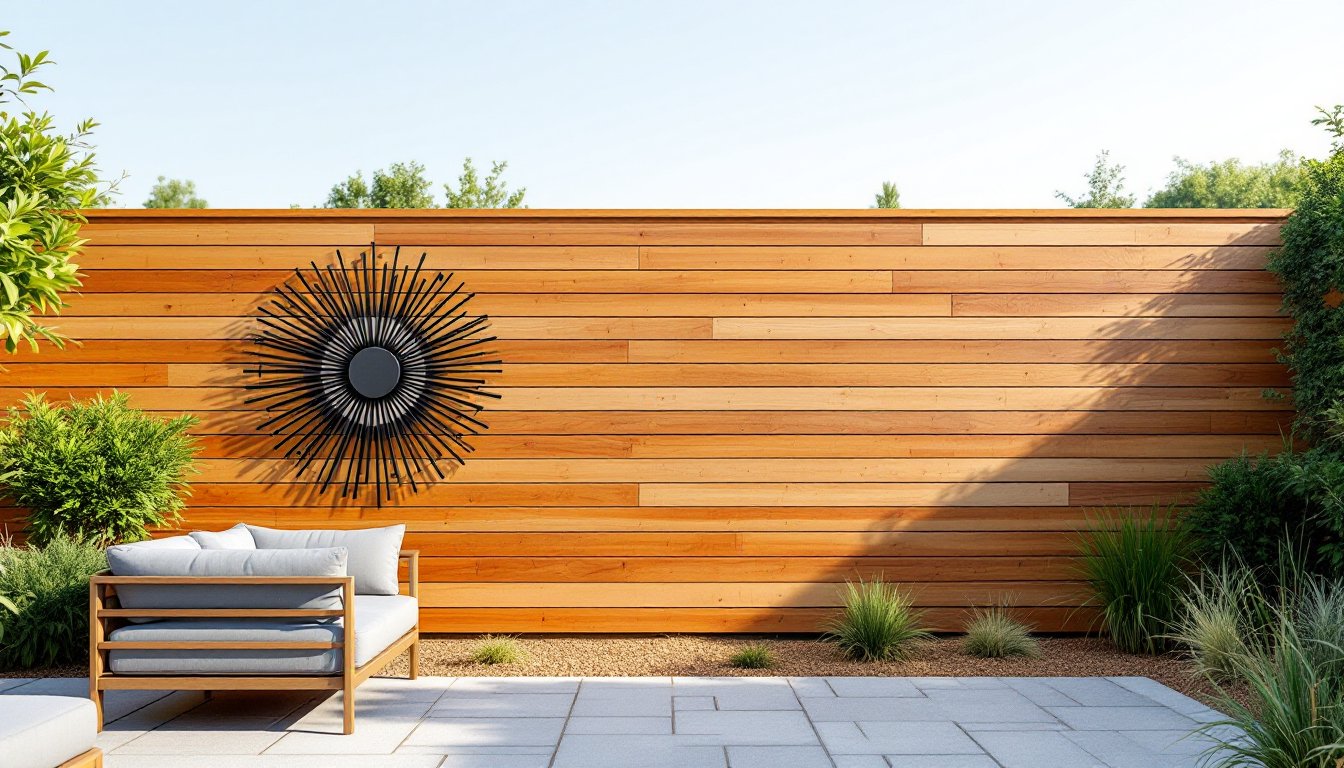

Blank exterior walls don’t need to stay boring. Extra large outdoor wall decor turns flat, lifeless surfaces, fences, garage walls, patio backdrops, into focal points that anchor a yard’s design. Unlike small accent pieces that get lost against large backdrops, oversized decor commands attention and defines outdoor rooms. The right piece can make a narrow side yard feel intentional, break up a long fence line, or give a plain stucco wall the character it’s missing. But going big outdoors means dealing with weather, weight, and wind load. Choosing materials that last and installing them properly keeps the investment from ending up in the neighbor’s azaleas after the first storm.
Key Takeaways
- Extra large outdoor wall decor (36 inches or larger) commands attention on expansive exterior surfaces where smaller pieces would disappear, creating intentional focal points that anchor yard design.
- Powder-coated aluminum, weathering steel (Corten), and quality composite materials offer the best durability against UV, moisture, and temperature swings, with minimal maintenance compared to untreated wood.
- Mount oversized pieces at 48–60 inches from ground to center opposite seating areas, one-third down long fence lines, and above outdoor kitchens for maximum visual impact and guest sightlines.
- Secure extra large outdoor wall decor to solid backing (wood studs, fence posts, or masonry anchors) using stainless steel fasteners rated for at least double the piece’s weight, with minimum four-point mounting in high-wind areas.
- Bold geometric, nature-inspired, and style-matched designs prevent outdoor wall art from dating quickly, while proper spacing and installation prevent weather damage and structural failure.
Why Extra Large Outdoor Wall Decor Makes a Statement
Scale matters outside. A piece that feels dramatic indoors often disappears when mounted on a 20-foot fence or two-story wall. Extra large outdoor decor, typically 36 inches or larger in any dimension, balances the proportions of exterior architecture and landscaping. It creates visual weight that holds its own against trees, roof lines, and open sky.
Oversized pieces solve common design problems. Long expanses of siding or fencing can feel monotonous: a single large focal point breaks that up better than scattering small items. In open yards lacking mature plants, a statement piece provides instant structure. It also draws the eye upward, making spaces feel taller and more finished.
From a practical standpoint, one substantial piece often costs less and requires less fuss than arranging multiple smaller ones. Fewer mounting points mean fewer chances for water intrusion into siding or masonry. And when it’s time to refresh the look, swapping out one anchor piece is simpler than reworking an entire gallery wall.
The psychological effect shouldn’t be overlooked either. Bold decor signals that outdoor spaces are intentional living areas, not afterthoughts. Guests notice. It sets a tone before anyone steps through the door.
Top Materials for Durable Outdoor Wall Art
Outdoor decor faces UV, moisture, temperature swings, and wind. Materials that work indoors often warp, rust, or fade in months outside. Durability isn’t optional when a piece weighs 30 pounds and hangs eight feet up.
Metal and Wrought Iron Pieces
Powder-coated aluminum leads for corrosion resistance and low weight. The coating, an electrostatically applied finish baked at high heat, bonds to the metal and resists chipping better than paint. Aluminum won’t rust, making it ideal for coastal or high-humidity climates. Expect pieces in the 15- to 25-pound range for a 48-inch design, manageable for one person to hang.
Wrought iron and steel offer traditional looks with heft, a 40-inch scrollwork piece can weigh 40+ pounds. Steel must be hot-dip galvanized or powder-coated to prevent rust: even small scratches in the finish let moisture reach bare metal. Wrought iron develops a rust patina over time, which some prefer for a weathered aesthetic. Both materials handle wind load well due to their mass, but mounting requires hitting solid framing or using heavy-duty anchors rated for the weight.
Corten steel (weathering steel) intentionally rusts to form a stable, protective layer. The orange-brown patina stops deepening after a few months and won’t stain most surfaces, though runoff can discolor light-colored stone or concrete during the first season. It’s a modern choice that looks at home against board-formed concrete or horizontal siding.
Weather-Resistant Wood and Composite Options
Cedar and redwood contain natural oils that resist rot and insects, but they still need sealing. Left untreated, they’ll silver to gray, fine for rustic styles, less so for stained finishes. Marine-grade spar urethane or penetrating oil finishes hold up better than standard polyurethane. Expect to reapply every 18–24 months depending on sun exposure. Large wooden pieces are often hollow or use lattice-backed designs to reduce weight: solid wood panels over 36 inches can warp with moisture cycling.
Composite materials, typically wood fiber and polymer blends, resist rot and insects without sealing. They won’t splinter or crack like solid wood, and UV inhibitors in quality products prevent severe fading. Brands like Trex and Azek make decking that can be repurposed into wall art frames or backing panels. Composites expand and contract less than wood, reducing fastener loosening over time.
Exterior-grade plywood or MDO (medium-density overlay) works for painted designs. MDO has a resin-fiber surface that holds paint exceptionally well, it’s used for highway signs. Both need sealed edges and proper primer (oil-based or bonding primer) before topcoating with 100% acrylic exterior paint. Direct ground contact or constant water exposure will still degrade them.
Popular Styles and Design Themes for Large-Scale Outdoor Walls
Style should match the home’s architecture and the yard’s character, but outdoor wall art has more flexibility than interior decor. Bold choices work when they’re proportional to the space.
Geometric and modern designs, overlapping circles, angular sunbursts, abstract grids, suit contemporary homes with clean lines. Powder-coated metal in matte black or bronze complements gray siding, stucco, and stone. These pieces often use negative space as part of the design, keeping visual weight lighter even at large sizes.
Nature-inspired motifs translate well outdoors: oversized metal leaves, tree silhouettes, or botanical line drawings. They echo the landscape without competing with it. A six-foot heron cutout mounted on a wood fence can blend into the background of a garden yet anchor the view from a patio.
Nautical and coastal themes, ship wheels, anchors, compass roses, work in any region but feel natural near water. Distressed finishes and weathered wood fit here. Scale up confidently: a three-foot anchor looks tentative, but a five-footer owns the wall.
Southwestern and rustic styles favor warm metals (copper, rusted steel), sunburst designs, and desert flora like agave or saguaro silhouettes. Stained or rough-cut cedar pairs well. These suit stucco, adobe, and ranch-style homes but can warm up modern builds too.
Farmhouse and industrial hybrids mix aged wood with metal strapping or pipe frames. Think oversized window frames (no glass), barn-style stars, or metal windmill art. The lived-in look hides weathering, so minor rust or wood graying becomes part of the charm.
Avoid themes that date quickly or clash with the setting. A tropical tiki mask on a colonial brick wall reads as confusion, not creativity.
Best Placement Ideas for Maximum Visual Impact
Placement determines whether a piece enhances the space or just hangs there. Consider sightlines, lighting, and what the wall backs onto.
Opposite seating areas: Mount decor on the wall facing a patio, deck, or fire pit so guests naturally look at it. Center it at seated eye level, roughly 48 to 60 inches from the ground to the piece’s midpoint, rather than hanging it as high as you would indoors.
Entry and gate focal points: Position large decor beside or above entry gates, garage doors, or courtyard entrances. It frames the transition into the space. A vertical piece (48 x 24 inches or taller) works better than horizontal in narrow passages.
Breaking up long fences: On privacy fences running 20+ feet, place decor roughly one-third of the way in from an end rather than dead center. The asymmetry feels more dynamic. If the fence backs a garden bed, let plantings partially overlap the bottom edge for integration.
Garage and shed walls: These large, blank surfaces handle oversized decor well but often face alleys or side yards with limited viewing angles. Mount pieces where they’re visible from the driveway, back door, or main yard, not just when taking out the trash.
Above outdoor kitchens or bars: A backsplash wall behind a grill or bar station is prime real estate. Keep decor at least 18 inches above the cooking surface and out of the smoke path. Metal withstands heat better than wood or fabric elements.
Avoid mounting on:
- Walls that get afternoon sun for hours (excessive UV fading)
- Surfaces prone to splash-back from sprinklers or downspouts
- Areas within reach of play zones, swings, trampolines, where impacts can occur
Check that the wall itself is sound. Rotted fence boards or crumbling mortar won’t hold fasteners reliably, regardless of anchor type.
Installation Tips for Heavy Outdoor Wall Decor
Most extra-large outdoor decor fails from poor installation, not material failure. Wind load and weight make outdoor mounting more demanding than hanging a picture frame.
Find solid backing: On wood fences and siding, hit the studs or posts, typically 16 or 24 inches on center for walls, 6 to 8 feet for fence posts. Use a stud finder or probe with a finish nail. Fastening only to thin boards or surface materials won’t hold. For masonry (brick, block, stucco), use masonry anchors or sleeve anchors rated for outdoor use and the decor’s weight. Tapcon screws work but can crack brittle brick: pilot holes slightly smaller than the screw diameter reduce this.
Select appropriate fasteners:
- Lag screws (1/4-inch or larger) into studs for pieces over 20 pounds. Pre-drill to prevent splitting.
- Structural screws (e.g., GRK or Spax brands) offer high shear strength without pre-drilling in some woods.
- Toggle bolts or heavy-duty hollow-wall anchors for hollow surfaces, rated at least double the decor’s weight.
- Stainless steel or coated fasteners prevent rust stains on siding.
Account for wind: Large decor acts as a sail. In areas with regular winds over 25 mph, mount at four points minimum, top and bottom, left and right. Pieces with open designs (cutouts, latticework) catch less wind than solid panels. Allow 1/4 to 1/2 inch of space between the decor and wall for air movement: this reduces rattling and moisture trapping.
Use a level and helper: Even a half-degree tilt is obvious at 60 inches wide. Mark mounting holes with the piece held in position (get a second pair of hands), then set the decor aside to drill. For very heavy items, temporarily support the bottom with a ledger board screwed level to the wall, rest the decor on it, then fasten the top points before removing the ledger and securing the bottom.
Safety gear: Safety glasses when drilling overhead, work gloves for handling metal edges, and hearing protection if using a hammer drill on masonry. A fall from a ladder while holding 30 pounds is worse than it sounds, use a stable ladder and hand pieces up rather than climbing with them.
Permit check: Attaching decor to existing walls rarely requires permits, but if cutting into load-bearing walls or altering structural elements, check local codes. Adding blocking or modifying framing might need inspection.