
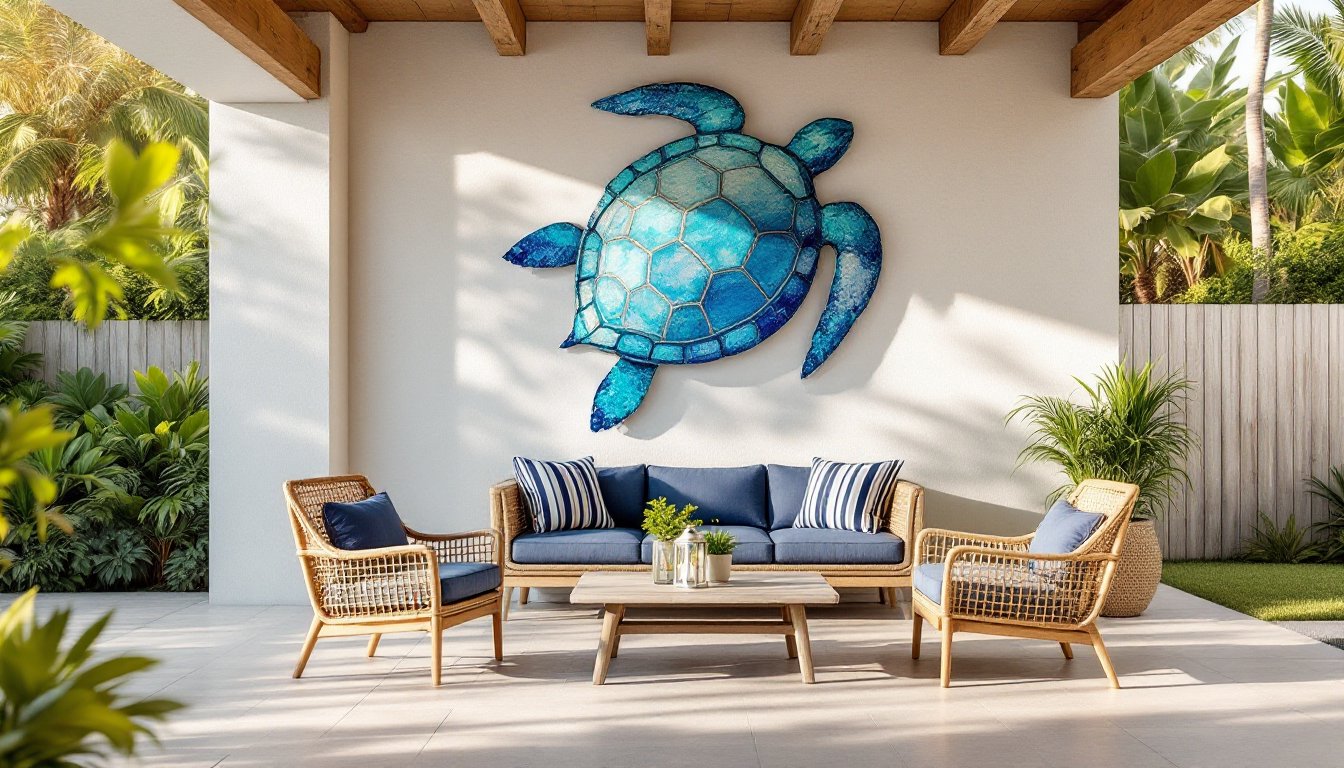

Adding large outdoor coastal wall decor turns a bland patio or deck into a space that feels like vacation year-round. Unlike indoor accent pieces, outdoor coastal art must withstand sun, rain, humidity, and temperature swings without fading, warping, or rusting. The right piece anchors the design of an outdoor room, creating a focal point that ties furniture, planters, and lighting together. Whether the home sits oceanside or hundreds of miles inland, oversized coastal wall art brings that breezy, salt-air aesthetic to any exterior wall, fence, or pergola.
Key Takeaways
- Large outdoor coastal wall decor anchors exterior spaces with visual impact, turning patios and decks into year-round vacation retreats when built from weather-resistant materials.
- Powder-coated aluminum is the gold standard for coastal wall art—it’s rust-proof, UV-resistant, and maintains color far better than painted steel or untreated wood.
- Marine life sculptures, nautical motifs, and abstract wave panels are the most popular coastal design themes, with metal versions outperforming wood in durability and wind resistance.
- Placement matters as much as material: covered patios and pergolas extend the lifespan of outdoor coastal decor, while full-sun walls require UV-protective topcoats and realistic expectations for color softening.
- Secure large pieces (over 24 inches) to structural studs, beams, or fence posts using stainless steel fasteners, and avoid direct ground contact for wood and composite pieces to prevent moisture damage.
Why Coastal Wall Art Works Perfectly for Outdoor Spaces
Coastal design themes translate naturally to outdoor settings because they’re already rooted in weather-exposed environments. Shells, driftwood, anchors, marine life, and nautical hardware are materials and motifs originally designed to survive harsh conditions. This makes them ideal for exterior decor that needs to hold up under UV rays, moisture, and wind.
Large-scale pieces create visual impact without cluttering limited outdoor square footage. A single oversized metal sea turtle or a three-panel wave mural does more design work than a dozen small accents scattered around. It draws the eye upward, making covered patios and pergolas feel taller and more intentional.
Coastal color palettes, blues, aquas, weathered whites, sandy beiges, and driftwood grays, naturally complement most outdoor furniture and landscaping. These hues don’t compete with greenery or pool water: they enhance them. The style also ages gracefully. A bit of natural weathering on coastal decor often improves its character, unlike other styles that look shabby when they fade.
Best Materials for Large Outdoor Coastal Wall Decor
Choosing the wrong material is the fastest way to waste money on outdoor decor. A piece that looks great in April can warp, rust, or fall apart by August if it’s not built for exterior exposure.
Metal and Aluminum Coastal Pieces
Powder-coated aluminum is the gold standard for large outdoor wall art. It’s lightweight, rust-proof, and holds color well under direct sun. Unlike raw steel or iron, aluminum won’t oxidize, even in high-humidity coastal climates. Powder coating, a heat-cured finish, bonds to the metal better than spray paint, resisting chips and UV fade.
Look for pieces with marine-grade or outdoor-rated powder coating. Some manufacturers apply a clear topcoat for extra UV protection. Thickness matters: 18-gauge to 14-gauge aluminum provides enough rigidity for large designs (36 inches or more) without sagging over time.
Galvanized or stainless steel works well for industrial or rustic coastal looks, think distressed anchors or ship wheels. Galvanization adds a zinc layer that prevents rust, but it will develop a patina over time. That weathered look suits coastal themes, but if a homeowner wants long-term color consistency, aluminum is the better choice.
Avoid raw or painted mild steel unless the piece will live under a covered porch that never sees rain. Even then, humidity can cause surface rust within a season.
Weather-Resistant Wood and Composite Options
Teak, cedar, and redwood are naturally rot-resistant due to their oils and tannins, but they still require annual treatment with marine-grade sealer or teak oil to prevent graying and splitting. These woods work best for carved or layered designs, like dimensional fish or wave patterns, where the wood grain enhances the aesthetic.
Composite wood panels (often used for decking) offer better weather resistance with less maintenance. They won’t splinter, crack, or warp, and some brands come in driftwood or weathered finishes that suit coastal themes. They’re heavier than natural wood, so mounting requires stainless steel or coated deck screws driven into solid blocking or studs.
Reclaimed wood looks authentic but needs serious prep for outdoor use. Any piece should be dried, sealed on all sides (including edges and backs), and checked for insects or rot before installation. Even treated, reclaimed wood has a shorter outdoor lifespan than composites.
Avoid plywood, MDF, or particleboard, even if labeled “exterior grade.” They’ll swell and delaminate with repeated moisture exposure.
Popular Coastal Design Themes for Oversized Wall Art
Large outdoor coastal wall decor falls into a few recognizable categories, each with its own vibe and practical considerations.
Nautical and maritime motifs, anchors, ship wheels, rope designs, compass roses, lean traditional and work well with navy, white, and brass accents. These pair nicely with striped outdoor cushions and lantern-style lighting. Metal versions hold up best: wood ship wheels need sheltered placement.
Marine life sculptures (sea turtles, octopuses, dolphins, jellyfish, schools of fish) add movement and whimsy. Layered metal designs create shadow play as the sun moves. Dimensional pieces should be secured with at least two mounting points to prevent wind spin.
Abstract wave or horizon panels offer a modern, serene alternative to literal beach themes. Multi-panel sets (diptychs or triptychs) let homeowners scale the piece to fit the wall. Look for panels with integrated hanging hardware on the back: trying to retrofit D-rings onto smooth metal can be frustrating.
Weathered or distressed finishes mimic driftwood, aged buoys, or salt-crusted pier wood. These suit farmhouse-coastal or shabby-chic styles. Be aware that “distressed” and “weather-resistant” aren’t the same, ask whether the distressing is a finish or if the piece is genuinely built to weather further.
Oversized typography or word art (“Beach,” “Paradise,” “Seas the Day”) can feel gimmicky in small formats but gain gravitas at 36+ inches. Choose simple fonts and durable materials: thin script letters in flimsy metal will bend in wind.
Where to Place Large Coastal Wall Decor Outdoors
Placement affects both aesthetics and longevity. Even weather-resistant materials last longer when positioned thoughtfully.
Covered patios and porches offer the most protection. A large piece mounted on a wall under a roof overhang gets shade from midday sun and shelter from direct rain, extending its life by years. This is the best spot for pieces with any wood content or intricate painted details.
Privacy fences and exterior siding work for fully weatherproof materials like powder-coated aluminum or composite. Mount directly into wall studs (typically 16 inches on center) or fence posts using stainless steel lag screws or outdoor-rated anchors. Avoid hanging heavy art on vinyl siding alone, it’ll pull away. Use a stud finder or tap along the wall to locate solid backing.
Pergolas and gazebos suit hanging or overhead-mounted pieces, but wind load becomes critical. Any decor over 24 inches should hang from structural beams (usually 2×6 or larger), not decorative trim. Use coated eye bolts or heavy-duty hooks rated for at least three times the item’s weight. Chain or marine-grade cable (vinyl-coated to prevent scratching) distributes stress better than wire.
Avoid direct ground contact for wood or composite pieces. Moisture wicking from soil accelerates rot. If mounting on a low fence or garden wall, leave at least a 2-inch gap between the bottom edge and grade.
Full-sun exposure will fade any decor over time, even rated materials. If the only available wall faces south or west with no shade, prioritize aluminum with UV-resistant topcoats and expect colors to soften after a few seasons. Some homeowners embrace that as part of the coastal weathered look.
Conclusion
Large outdoor coastal wall decor transforms generic patios into intentional, inviting spaces without major construction. Focus on materials engineered for weather exposure, powder-coated aluminum and marine-treated composites deliver the best durability for the investment. Match the design theme to the home’s existing outdoor palette, secure pieces properly to structural supports, and place them where they’ll get some shelter from the harshest elements. Done right, a single oversized coastal piece anchors the whole outdoor room and holds up season after season.