
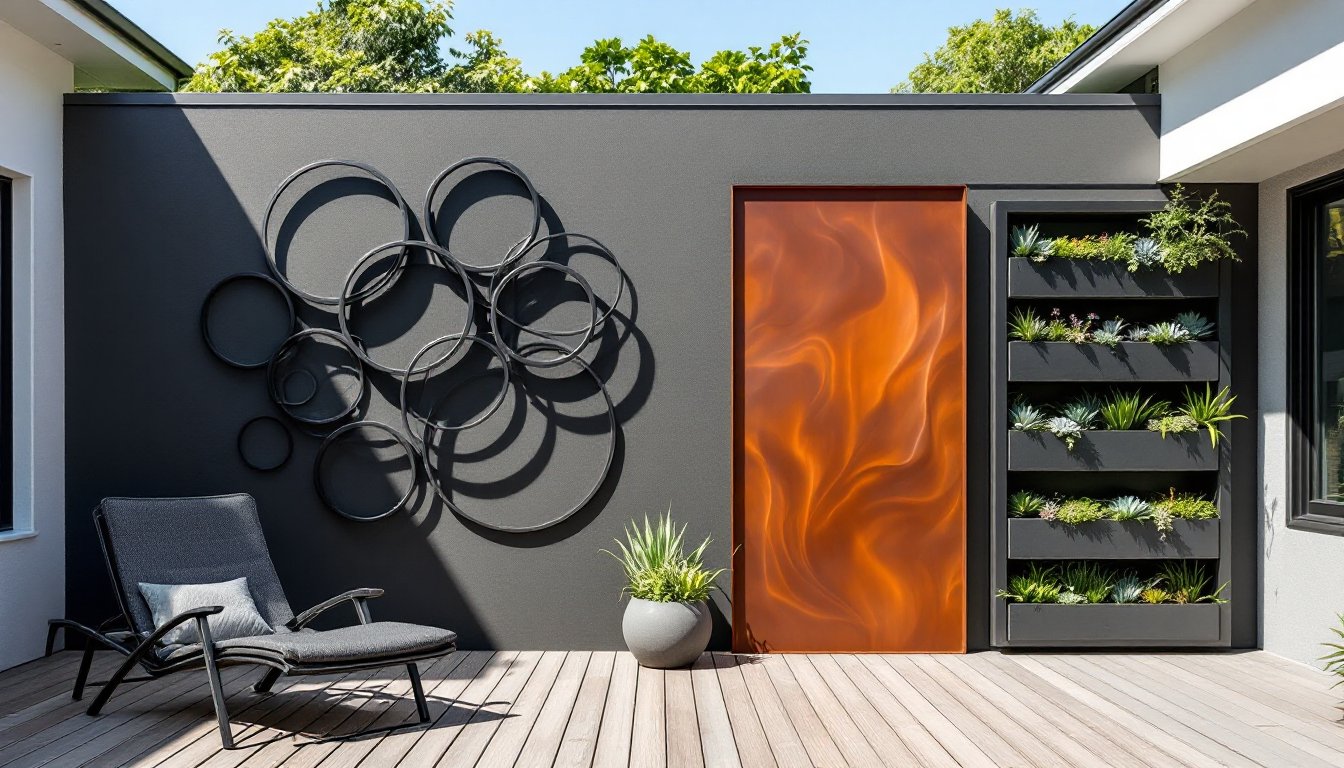

Outdoor living spaces have evolved beyond patios and grills. Homeowners are now treating exterior walls as canvases for design statements that rival indoor rooms. Modern outdoor wall decor bridges the gap between landscape and architecture, turning blank siding, fences, and privacy screens into focal points that define a home’s character. Unlike traditional outdoor decorations, think painted wood signs and wrought iron sun faces, modern pieces lean toward clean lines, durable industrial materials, and integrated greenery. They’re built to withstand UV exposure, freeze-thaw cycles, and storm winds while maintaining visual impact year-round. This guide walks through what makes outdoor wall decor “modern,” explores proven ideas for contemporary homes, and covers material selection and styling techniques that ensure installations look intentional, not haphazard.
Key Takeaways
- Modern outdoor wall decor emphasizes clean lines, geometric forms, and industrial materials like Corten steel and powder-coated aluminum rather than ornate traditional designs.
- Weather-resistant installation is critical—use stainless steel fasteners, proper waterproofing, and backing materials rated for freeze-thaw cycles to ensure outdoor wall decor lasts decades.
- Vertical gardens and living walls serve dual purposes by improving air quality and softening architecture while requiring engineered systems with built-in irrigation and proper waterproof backing.
- Scale pieces to occupy one-third to two-thirds of the wall section, position focal points at 57–60 inches from the ground, and layer elements at varying depths to create professional-looking compositions.
- Limit metal finishes to two per wall, use LED uplights for nighttime dimension, and embrace negative space—modern design thrives on restraint and editing ruthlessly to avoid clutter.
What Defines Modern Outdoor Wall Decor?
Modern outdoor wall decor prioritizes simplicity, geometry, and material honesty over ornate detail. The style pulls from mid-century modern and contemporary design principles: think asymmetry, monochromatic or high-contrast color palettes, and materials left in their natural state or finished with matte powder coatings.
Key characteristics include minimalist forms, circles, rectangles, linear patterns, rather than florals or representational imagery. Materials skew industrial: Corten steel, powder-coated aluminum, stainless steel, and cast concrete dominate, often combined with natural elements like preserved moss or drought-tolerant succulents in modular frames.
Unlike indoor wall art, outdoor pieces must meet structural and weatherproofing standards. Fasteners should be stainless steel or galvanized to prevent rust staining on siding. Pieces mounted to wood fences need backing that distributes weight across multiple pickets or rails to prevent warping. Vinyl siding requires specialized hooks or furring strips: direct screwing into vinyl can crack panels.
Modern designs also embrace negative space, the wall itself becomes part of the composition. A single oversized metal sculpture flanked by bare wall reads more contemporary than a cluttered gallery arrangement. Scale matters: pieces should relate to architectural features like windows, doors, or roof lines rather than floating arbitrarily.
Finally, modern outdoor decor often serves dual purposes. Vertical garden panels improve air quality and provide insulation. Perforated metal screens add privacy while allowing airflow. Reflective surfaces bounce light into shaded corners. This functional layer distinguishes modern installations from purely decorative tchotchkes.
Top Modern Outdoor Wall Decor Ideas for Contemporary Homes
Metal Art and Sculptural Pieces
Metal remains the workhorse of modern outdoor decor. Corten steel (weathering steel) develops a stable rust patina that protects the underlying metal while delivering rich amber and charcoal tones. Expect sheets in 14-gauge to 10-gauge thickness: thinner gauges can buckle in wind. Powder-coated aluminum offers lighter weight and comes in matte blacks, whites, and bronzes that won’t fade like paint. Stainless steel works for coastal installations where salt air corrodes other metals, though it carries a premium price.
Popular forms include geometric wall grids, think laser-cut hexagons or interlocking circles mounted an inch off the wall with standoffs to create shadow play. Three-dimensional sculptures in abstract organic shapes (waves, leaves, spirals) add depth without traditional framing. Some homeowners commission custom pieces with house numbers or coordinates laser-cut into panels, blending function with form.
Installation requires locating studs or masonry anchors rated for the piece’s weight plus wind load. Use a stud finder for wood-sided homes: masonry needs tapcon screws or sleeve anchors. For large pieces (over 20 pounds), two-person installation prevents bent mounting tabs. Leave a 1-inch air gap behind solid metal panels to prevent moisture trapping and mildew growth on siding.
Vertical Gardens and Living Walls
Living walls bring biophilic design outdoors, softening hard architectural lines with texture and seasonal color. Modern systems use modular felt pockets, galvanized metal grids, or powder-coated steel frames that hold individual plant containers. Unlike DIY pallet gardens, engineered systems include built-in irrigation channels and drainage layers.
For low-maintenance installations, choose drought-tolerant succulents like sedum, echeveria, and sempervivum. These thrive in shallow soil (2–3 inches) and tolerate irregular watering. Ferns and pothos work for shaded north-facing walls with consistent moisture. Avoid heavy feeders like annuals that require constant fertilization.
Mounting vertical gardens to walls requires waterproof backing, marine-grade plywood sealed with polyurethane or PVC backer board. Standard OSB or untreated plywood will delaminate within a season. Attach the backing to wall studs with 3-inch exterior-grade screws spaced 16 inches on center. Install a drip edge or flashing along the top to divert rain away from the wall-garden interface.
Irrigation can be manual (watering cans) for small installations or automated with a drip system on a timer. Run quarter-inch tubing from an outdoor spigot through a pressure regulator (25 PSI max for drip lines). Zones with freezing winters require blowouts before the first hard freeze to prevent pipe bursts.
Moss walls offer a zero-maintenance alternative. Preserved reindeer moss or sheet moss comes pre-treated with glycerin and dye, maintaining color for 5+ years without water or sunlight. Frame sections in shallow shadowboxes with metal or black-stained wood borders for a gallery effect.
Choosing Weather-Resistant Materials That Last
Outdoor decor faces temperature swings, UV degradation, moisture infiltration, and wind shear. Material selection determines whether a piece lasts two seasons or two decades.
Metals: Powder-coated aluminum and Corten steel top the durability list. Powder coating, electrostatically applied and oven-cured, bonds at the molecular level, resisting chips better than liquid paint. Expect minimal fading in blacks and earth tones: bright colors may dull after 5–7 years of direct sun. Untreated mild steel rusts through in 3–5 years unless sealed annually with clear polyurethane or marine varnish.
Wood and Composite: Exterior-grade plywood (CDX or marine ply) and solid cedar or redwood resist rot better than pine or fir. Seal all edges and backs with two coats of exterior primer and acrylic latex paint or penetrating oil stain. Composite decking scraps (Trex, TimberTech) can be repurposed into modern wall panels: they won’t splinter or rot but can fade without UV inhibitors.
Concrete and Stone: Cast concrete panels, especially those with fiber reinforcement, tolerate freeze-thaw cycles without cracking. Seal porous concrete with siloxane or silane-based sealers to prevent water absorption and efflorescence (white salt deposits). Natural stone tiles like slate or bluestone need mortared installation over cement backer board, not directly onto wood siding.
Fabrics and Textiles: Outdoor-rated fabrics (Sunbrella, solution-dyed acrylics) resist UV and mildew but still need seasonal cleaning with mild detergent. Macramé wall hangings in synthetic rope (polypropylene) outlast natural cotton or jute, which mildew in humidity.
Fasteners and Hardware: Use stainless steel (304 or 316 grade) or hot-dip galvanized screws, bolts, and wire. Standard zinc-plated hardware rusts within months. For hanging wire, choose braided stainless aircraft cable rated for 2–3 times the piece’s weight. Crimp sleeves or ferrules secure ends more reliably than twisted wire.
All materials benefit from annual inspections. Check for loose fasteners, paint peeling, or substrate rot. Tighten hardware before storm season and reapply sealers as needed.
How to Style Your Outdoor Walls Like a Designer
Professional-looking installations follow spatial and compositional rules that create cohesion rather than clutter.
Scale to Architecture: Measure the wall section first. A piece should occupy one-third to two-thirds of the vertical or horizontal span it’s centered on. A 6-foot fence panel looks balanced with a 3–4 foot wide sculpture. Oversized pieces (8+ feet) work on tall blank walls flanking garage doors or above outdoor fireplaces.
Eye-Level Placement: Hang central focal points so the midpoint sits 57–60 inches from the ground, standard gallery height. For seating areas, drop that to 48–52 inches so viewers enjoy the piece while seated. Pieces above head height (70+ inches) disappear unless the viewing distance is 15+ feet back.
Create Visual Triangles: Group three elements of varying heights, a tall vertical garden panel, a medium round mirror, and low horizontal metal art, to form an implied triangle. This guides the eye through the composition without symmetry.
Use Repetition Sparingly: Repeating identical elements (three matching metal panels spaced evenly) reads modern. More than three starts feeling institutional. Vary spacing slightly, 16 inches between the first pair, 20 inches before the third, to add organic rhythm.
Layer Depth: Mount pieces at different distances from the wall. Use 1-inch standoffs for metal art, 4-inch brackets for planter boxes, and surface-mount frames for moss panels. The interplay of shadows adds dimension, especially in morning and evening light.
Coordinate Finishes: Limit metal finishes to two per wall, matte black with natural Corten, or brushed stainless with powder-coated white. Mixing too many metallics (brass, copper, bronze, chrome) dilutes the modern aesthetic.
Integrate Lighting: Install low-voltage LED uplights or wall washers to graze textured surfaces at night. Bullet fixtures mounted 12–18 inches from the wall create dramatic shadows. Use warm white (2700K–3000K) for inviting ambiance: cool white (4000K+) feels stark.
Respect Sightlines: Avoid blocking windows, vents, or hose bibs. Maintain clearances from roof eaves (12+ inches) and grade level (6+ inches) to prevent water damage and allow airflow.
Finally, edit ruthlessly. Modern design thrives on restraint. If a wall feels busy, remove the smallest or least impactful piece. Negative space isn’t wasted space, it’s breathing room that lets standout elements shine.
Conclusion
Modern outdoor wall decor transforms underutilized vertical surfaces into design-forward statements that extend a home’s living space. By prioritizing weather-resistant materials, proper installation methods, and thoughtful composition, homeowners create exterior walls that rival interior rooms in polish and impact. Whether opting for sculptural metal, living greenery, or layered mixed-media installations, the key lies in balancing boldness with restraint, and always anchoring pieces securely enough to outlast the next storm season.