
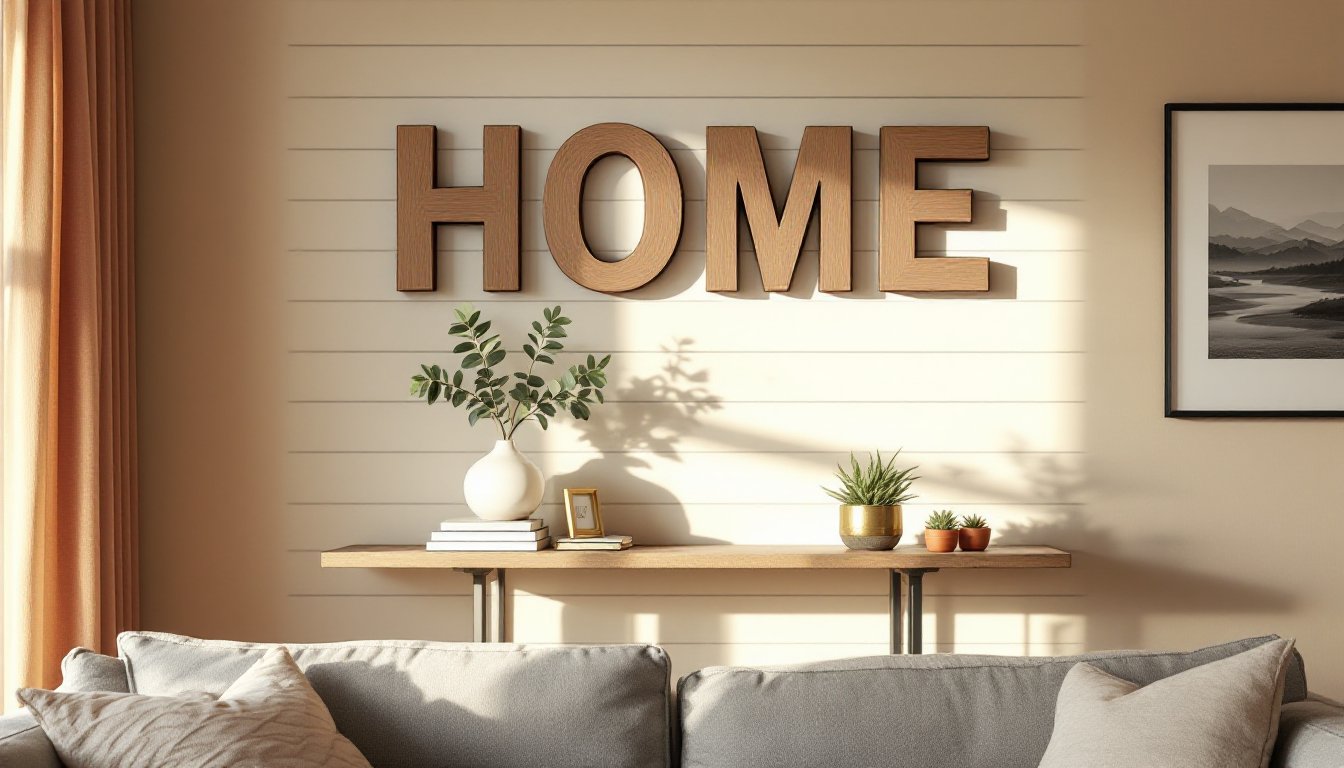

Wall letter decor has evolved from simple monograms to a versatile design tool that adds personality, dimension, and visual interest to any room. Whether spelling out a family name in the entryway, creating an inspirational word in a home office, or adding dimensional typography to a nursery, wall letters offer instant impact without major construction. Unlike paint or wallpaper, letter decor can be repositioned, swapped seasonally, or moved between rooms as design needs change. With options ranging from reclaimed wood and brushed metal to illuminated marquee styles, homeowners can achieve everything from rustic farmhouse charm to modern industrial edge. This guide covers material selection, proper installation techniques, and creative placement strategies that turn blank walls into focal points.
Key Takeaways
- Wall letter decor offers customizable, dimensional typography that adds personality to any room without major construction or permanent commitments.
- Popular materials for letter wall decor range from affordable MDF ($3–8 per letter) to solid wood, metal, and illuminated marquee styles that suit different design aesthetics.
- Proper sizing and placement are essential—use painter’s tape to test letter dimensions from 8–10 feet away, positioning centerlines at 57–60 inches from the floor for optimal visual impact.
- Mount large or heavy letters (over 15 inches) directly into wall studs or onto a secured mounting cleat to ensure long-term stability and safety.
- Creative display strategies like layering letters with gallery walls, stacking vertically in narrow spaces, or combining mixed materials maximize design impact while maintaining flexibility for seasonal updates.
Why Wall Letters Are the Perfect Design Element
Letter decor delivers several practical advantages over traditional wall art. First, it’s inherently customizable, homeowners choose the exact message, font style, and finish that matches their space. Second, dimensional letters create shadow lines and depth that flat art can’t replicate, especially important in rooms with neutral color schemes that need texture.
From a DIY perspective, wall letters decor simplifies installation compared to gallery walls or complex shelving systems. Most pieces mount with keyhole hangers, adhesive strips, or simple screws into drywall anchors. There’s no leveling multiple frames or calculating precise spacing between a dozen elements. A single word or short phrase provides a finished look with minimal wall penetrations.
Wall letters also scale well across different room sizes. Small 4-inch letters work in powder rooms or above light switches, while 18-24 inch letters command attention in open-concept living areas with high ceilings. Unlike framed art, where sizing mistakes are costly, letters can be arranged, measured with painter’s tape, and adjusted before any holes are drilled.
Finally, letter decor bridges the gap between permanent architectural features and temporary accessories. It feels more intentional than removable vinyl decals but doesn’t require the commitment of built-in shelving or wainscoting. For renters or homeowners who update spaces frequently, that flexibility matters.
Popular Types of Letter Wall Decor
Metal and Wooden Letters
Wooden letters remain the most versatile option for DIY finishing. Raw MDF letters (typically ½-inch to ¾-inch thick) come ready to paint, stain, or decoupage. They’re lightweight, easy to drill through for mounting, and accept any finish from high-gloss lacquer to distressed chalk paint. Solid wood letters, often cut from pine, oak, or reclaimed barn wood, offer authentic grain patterns and can be sanded, routed, or carved for added detail. Expect to pay $3-8 per letter for basic MDF, $12-30 for solid wood depending on size and species.
Thicker wooden letters (2-4 inches deep) create stronger shadows and work well in rustic or coastal spaces. Many DIYers wrap them in jute rope, cover them with book pages, or apply weathering techniques using vinegar and steel wool for an aged appearance.
Metal letters provide an industrial or vintage aesthetic. Common options include:
- Galvanized steel: Durable, rust-resistant, works indoors or on covered porches. The zinc coating develops a matte patina over time.
- Rusted iron: Pre-rusted finishes (often sealed) suit farmhouse or loft-style interiors. Real rusted metal should be sealed with a clear coat to prevent flaking and staining walls.
- Brushed aluminum or stainless steel: Modern, clean-lined, reflects light well. Often laser-cut with smooth edges.
Metal letters typically mount with concealed keyhole slots or welded standoffs (small posts on the back that hold the letter ¼-½ inch off the wall for a floating effect). Confirm weight ratings, letters over 12 inches may require toggle bolts or mounting into studs, especially on drywall.
Marquee and LED Letter Lights
Marquee letters feature Edison-style bulbs or LED lights set into metal housings, mimicking vintage theater signage. They run on standard 120V outlets or battery packs (AA or rechargeable). Plug-in versions offer consistent brightness but require access to an outlet or a hidden extension cord, plan the route before mounting. Battery-powered models provide more flexibility but need fresh batteries every 20-40 hours of use depending on bulb count.
Installation considerations:
- Weight: Marquee letters with metal housings can weigh 3-8 pounds each. Use appropriate drywall anchors (50+ lb rating) or mount into studs.
- Heat output: Incandescent bulbs generate noticeable heat. Keep letters at least 6 inches from curtains, bedding, or shelving holding flammable materials. LED versions stay cool and draw 80% less power.
- Cord management: Surface-mount cord raceways (paintable plastic channels) hide power cords along baseboards or behind furniture. For a cleaner look, consider hiring an electrician to install an outlet behind the letter display, typically a $150-300 job depending on wire run complexity.
LED neon-style letters offer the glow of traditional neon without high voltage or fragile glass tubes. They’re flexible, lightweight, and available in dozens of colors. Most use 12V adapters and can be dimmed with inline controls. Mounting usually involves small clips screwed into the wall every 8-12 inches along the letter shape.
Choosing the Right Size and Placement
Letter sizing follows similar principles to art scaling. As a baseline:
- Small rooms (under 100 sq ft): 4-8 inch letters work well above doors, on narrow walls, or in grouped arrangements.
- Standard bedrooms and living areas (100-250 sq ft): 8-14 inch letters provide presence without overwhelming.
- Large open spaces, entryways, or high ceilings (250+ sq ft): 18-36 inch letters create proper visual weight.
Measure the wall section where letters will hang, then use painter’s tape to outline letter sizes. Step back 8-10 feet (the typical viewing distance) to assess scale. Letters that look huge up close often read perfectly from across the room.
Viewing height matters. For most applications, position letters so the centerline sits at 57-60 inches from the floor, the standard gallery height used in museums. In dining rooms or above furniture, center letters on the wall space above the piece, typically 6-10 inches of clearance. For instance, if a sofa back is 32 inches tall, start letters around 38-42 inches from the floor.
Spacing between letters depends on style. Tight spacing (1-2 inches) creates a unified word that reads as a single element. Wide spacing (4-8 inches) emphasizes individual letters and works well for initials or short phrases. Use a laser level or a taut string line to keep baselines aligned, inconsistent heights are immediately noticeable.
Substrate considerations: Always locate studs with a stud finder before mounting heavy or large letters. Standard drywall can support 5-10 pounds per anchor point using plastic expansion anchors or toggle bolts, but exceeding that risks pulling free under vibration or accidental bumps. For letters over 15 inches or metal pieces, fasten at least two mounting points directly into studs for long-term stability. If studs aren’t conveniently located, install a mounting cleat (a horizontal 1×2 secured to studs) and attach letters to the cleat instead.
Creative Ideas for Displaying Wall Letters
Wall letters decor adapts to nearly any room and style with the right approach.
Layered gallery walls: Combine letters with framed photos, small mirrors, or floating shelves. Start with the letters as the anchor piece, then build the gallery around them. Maintain consistent spacing (2-3 inches between elements) and use paper templates taped to the wall to finalize the layout before driving nails.
Floating shelf integration: Place dimensional letters on a picture ledge or floating shelf rather than mounting them directly. This allows seasonal swaps without new wall holes and adds depth variation. Use museum putty or adhesive-backed Velcro dots to prevent letters from tipping forward.
Vertical stacking: In narrow spaces like stairwells or beside doorways, stack letters vertically instead of horizontally. This works especially well with single words like “WELCOME” in entryways or “WASH” above laundry room sinks.
Mixed materials and finishes: Alternate metal and wood letters within the same word for visual contrast, copper and walnut, galvanized steel and whitewashed pine. Ensure the mounting depth is consistent so all letters sit on the same plane.
Color blocking: Paint the wall section behind the letters a contrasting color (a rectangle or organic shape) to create a built-in “frame” effect. Tape off the area, prime with a stain-blocking primer if going from dark to light, and apply two coats of satin or eggshell finish for easy cleaning.
Outdoor applications: Use treated wood or powder-coated metal letters on covered porches, garden walls, or fences. Seal wooden letters with an exterior-grade polyurethane (minimum three coats) and mount with stainless steel or galvanized hardware to prevent rust staining. Check HOA guidelines before installing large letters visible from the street, some neighborhoods restrict signage size and placement.
Functional labeling: In mudrooms, pantries, or kids’ rooms, use individual letters to label bins, cubbies, or shelves. Small 2-3 inch letters attached with adhesive strips provide organization without the permanence of labels or chalkboard paint.
Conclusion
Wall letter decor offers a straightforward way to add personality and dimension to any room without advanced carpentry skills or large budgets. By selecting appropriate materials, sizing letters to the space, and using proper mounting hardware, homeowners can create custom displays that hold up over time. Whether opting for rustic wood, industrial metal, or illuminated marquee styles, attention to placement and installation details ensures professional-looking results that transform blank walls into intentional design statements.