
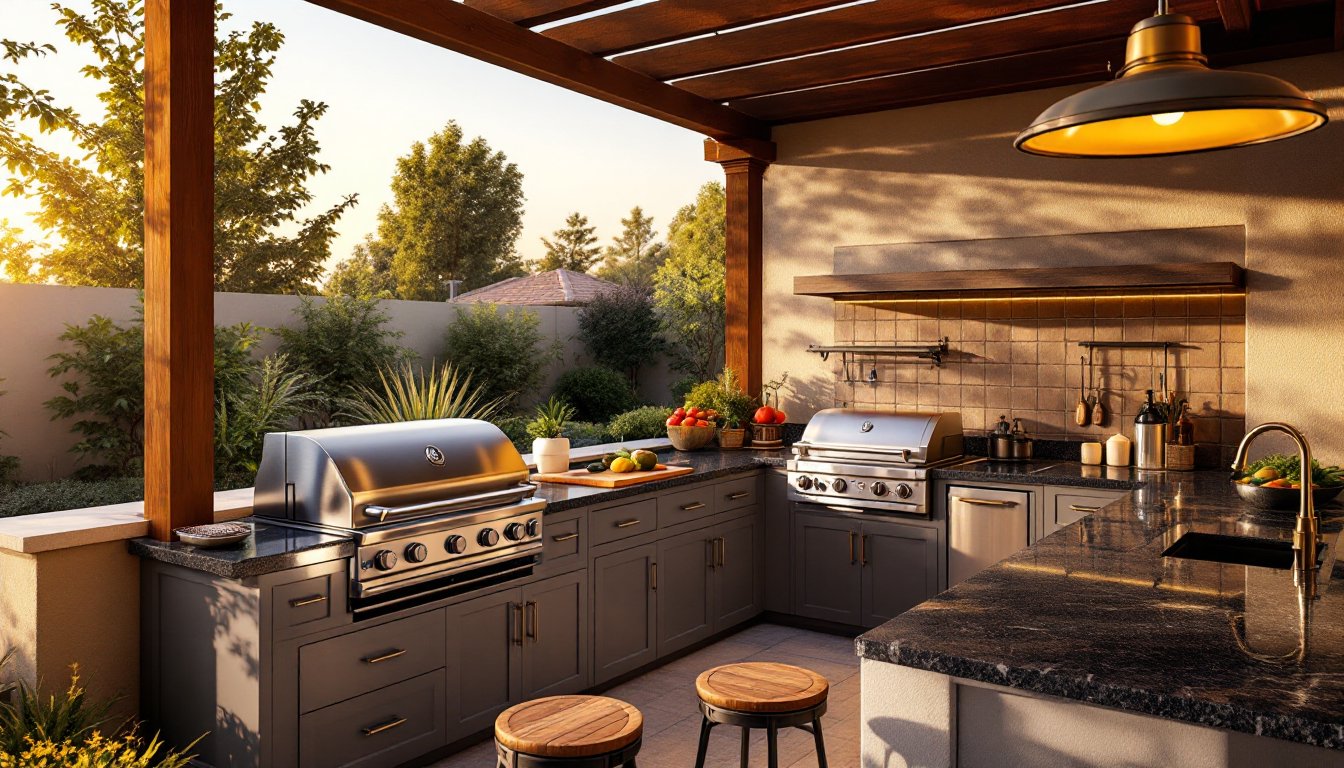

An outdoor kitchen transforms a backyard into a hub for cooking, entertaining, and enjoying warm-weather meals without shuttling plates through the house. But unlike indoor kitchens, outdoor builds face rain, snow, UV exposure, and temperature swings, making material choice and layout planning critical from day one. A well-designed setup balances workflow efficiency with durable finishes, weather-resistant appliances, and realistic budget guardrails. This guide walks through the core decisions: layout zones, appliance selection, material specs, budget allocation, and comfort upgrades that make the space genuinely usable year-round.
Key Takeaways
- Design your own outdoor kitchen around a compact work triangle connecting grill, prep area, and refrigeration to minimize steps and maximize cooking efficiency.
- Choose weather-resistant materials like 304-grade stainless steel, marine-grade polymer cabinetry, and sealed granite or concrete countertops to ensure durability through freeze-thaw cycles and UV exposure.
- Plan utilities (gas, water, electric) and run conduit before pouring concrete—addressing these during design costs far less than retrofitting after construction.
- Allocate your budget with appliances at 40–50%, counters and cabinetry at 25–30%, and utilities at 10–15%, phasing the project if needed to prioritize a quality grill and storage first.
- Add task lighting, shade structures, and comfortable seating to extend the outdoor kitchen’s usability into cooler months and transform it into a true gathering space.
- Verify local permits and fire codes (including 36-inch clearance above grills and 3-foot setbacks for propane tanks) before finalizing your outdoor kitchen layout and breaking ground.
Planning Your Layout and Workflow
Start with the work triangle concept borrowed from indoor kitchens: grill (cooking zone), prep counter (work zone), and refrigeration/storage (cold zone) should form a compact triangle to minimize steps. In outdoor settings, this often translates to a linear galley layout or L-shaped configuration against a fence line or house wall, which simplifies utility runs and provides wind protection.
Measure the available footprint and sketch zones on graph paper using a 1/4-inch scale (one square = one foot). Allow at least 24 inches of counter space on either side of the grill for plating and tool staging. If the layout includes a sink, position it between the grill and prep area, this becomes the midpoint for rinsing vegetables, filling pots, and cleanup.
Consider prevailing wind direction. Smoke blowing toward the house or seating area makes the space unusable. Observe airflow patterns at different times of day before finalizing grill placement. If the site has overhead structures (pergolas, roof extensions), verify clearance: most manufacturers require 36 inches minimum between grill surface and combustible overhead materials.
Utilities dictate layout flexibility. Gas grills need a natural gas stub-out or propane tank clearance (typically 3 feet from structure walls per fire codes). Sinks require hot and cold water supply plus drainage, either tied to the house plumbing or a dedicated outdoor drain line sloped at 1/4 inch per foot. Electrical outlets (GFCI-protected, weatherproof) should be positioned for refrigerators, blenders, and task lighting. Running utilities underground after concrete is poured costs far more than planning conduit runs beforehand.
For larger builds, sketch traffic flow from the house door to the kitchen, from the kitchen to dining/seating zones, and back. Avoid layouts that force guests to walk behind an active grill or through the cook’s work zone.
Choosing Essential Appliances and Features
The grill anchors most outdoor kitchens. Built-in gas grills (natural gas or propane) integrate cleanly and free up floor space compared to freestanding carts. Look for stainless steel burners (304-grade minimum) and cast-iron or stainless grates. BTU ratings matter less than burner design, 30,000–40,000 BTU across three or four burners provides even heat for a typical 36-inch grill. Brands like Weber, Lynx, and Twin Eagles publish dimensional cutout specs: confirm these match the planned island dimensions before ordering cabinetry.
A side burner (single or double) handles sauces, sautés, and boiling without monopolizing grill space. Standard cutouts are 12 x 12 inches or 12 x 24 inches for doubles. If budget is tight, a portable induction burner on the counter works as a temporary substitute.
Refrigeration keeps beverages cold and prevents trips indoors. Outdoor-rated refrigerators use sealed compressors and weatherproof venting to handle humidity and temperature extremes. Compact 24-inch undercounter models (4–5 cubic feet) fit neatly in base cabinets. Avoid repurposing indoor fridges outdoors, they’ll fail quickly in unconditioned environments.
Sinks require outdoor-rated faucets (solid brass or stainless) and basin materials that won’t crack in freezing temps. Stainless steel sinks are standard: minimum 15 x 15 inches for rinsing, larger if prepping whole vegetables or cleaning grill grates. Install a shut-off valve inside the house to drain lines before winter in freeze zones.
Storage often gets overlooked. Base cabinets should include at least one drawer for utensils and one cabinet for propane tanks, trash bins, or bulk supplies. Stainless steel doors with marine-grade hinges resist corrosion. Avoid MDF or particleboard cores, even with waterproof coatings, they swell and delaminate.
Optional features include pizza ovens (wood-fired or gas), smokers, warming drawers, and ice makers. Each adds cost and utility complexity. Prioritize based on actual cooking habits, a homeowner who grills twice a month won’t use a $3,000 pizza oven enough to justify it.
Selecting Durable Materials for All Weather
Outdoor kitchens endure sun, rain, snow, and temperature swings that would destroy most indoor finishes. Material selection directly affects longevity and maintenance load.
Countertops and Cabinetry
Granite remains the workhorse for outdoor counters, heat-resistant, scratch-resistant, and available in slabs up to 10 feet long to minimize seams. Expect 3-cm thickness for structural spans over cabinets. Seal granite annually with a penetrating sealer to prevent staining from grease and acidic marinades. Darker colors hide wear better than light hues.
Concrete offers custom shapes, integral color, and modern aesthetics. Pour-in-place or precast slabs work: both need sealed surfaces (topical or penetrating sealers reapplied every 1–2 years). Concrete can crack with freeze-thaw cycles unless properly reinforced with rebar or fiber mesh and control joints planned for slabs over 6 feet.
Tile (porcelain or natural stone) costs less but introduces grout lines that collect grime and require periodic resealing. Use frost-proof porcelain rated for outdoor use, indoor ceramic tiles absorb water and crack in winter. Grout should be epoxy-based or urethane-modified for stain resistance.
Avoid laminate, butcher block, and standard quartz (most formulations aren’t UV-stable and will discolor outdoors).
Cabinetry must resist moisture and UV. Marine-grade polymer cabinets (brands like Trex, WeatherStrong) use HDPE or PVC construction that won’t warp, rust, or rot. Stainless steel cabinets (304 or 316 grade) handle coastal salt air but show fingerprints and dent more easily than polymer. Powder-coated aluminum frames with stainless doors split the difference on cost and durability.
Skip wood cabinets unless using marine-grade plywood with multiple coats of exterior spar varnish, and even then, expect refinishing every few years. Pressure-treated framing is fine for structure behind weather-resistant cladding but shouldn’t be left exposed.
Backsplashes and side panels see less wear than counters. Stacked stone veneer, porcelain tile, or stucco finishes tie into home exteriors. If using stone veneer, install a water-resistant barrier and weep screed at the base to prevent moisture trapping behind the facade.
Setting Your Budget and Priorities
Outdoor kitchen costs vary wildly based on appliances, materials, and utility work. A basic setup, prefab grill island with a built-in gas grill and minimal counter space, starts around $3,000–$5,000 for DIY assembly or $6,000–$10,000 installed. Mid-range builds with custom masonry or stonework, sink, side burner, and refrigeration run $15,000–$30,000. High-end projects with multiple cooking zones, premium appliances, covered structures, and extensive hardscaping exceed $50,000.
Break the budget into categories:
- Appliances: 40–50% (grill, fridge, burners, sink)
- Counters & cabinetry: 25–30%
- Utilities (gas, water, electric): 10–15%
- Structural/base (concrete pad, framing): 10–15%
- Finishing touches (lighting, seating, decor): 5–10%
If funds are tight, phase the project. Start with a quality grill, basic counter, and storage. Add refrigeration and sinks in phase two once utility lines are accessible. Avoid cheap appliances that fail within two seasons, replacing a corroded burner assembly costs more than buying mid-grade equipment initially.
Permits depend on scope. Simple grill islands on existing patios often don’t require permits, but gas line work, electrical circuits, and permanent structures over a certain square footage typically do. Check with the local building department before breaking ground. Unpermitted work complicates home sales and insurance claims.
DIY vs. hiring out: Assembling prefab islands, laying pavers, and basic electrical (if comfortable with code) are manageable DIY tasks. Gas line connections, concrete pours over 100 square feet, and complex tile work warrant hiring licensed trades. A poorly set gas line is a safety hazard: a poorly poured slab cracks and settles.
Adding Comfort and Functionality
An outdoor kitchen isn’t just appliances and counters, comfort features extend usability into cooler months and evening hours.
Lighting is non-negotiable. Install task lighting under overhead structures or inside range hoods (LED strips or puck lights, outdoor-rated). Add ambient lighting around seating zones and pathways, low-voltage LED landscape lights on timers or photocells work well. All fixtures should carry a wet or damp location rating depending on exposure.
Shade structures (pergolas, roof extensions, retractable awnings) keep sun and light rain off the cook. If adding a permanent roof, verify it meets setback and height restrictions in local zoning codes. Pergolas provide partial shade: adding a polycarbonate or metal roof panel increases rain protection without requiring full permitting in many jurisdictions.
Seating defines whether the space feels like a cooking zone or a gathering spot. A bar-height counter (42 inches) with stools along one side invites conversation while the cook works. Built-in benches or a nearby dining table (weatherproof teak, aluminum, or poly lumber) complete the setup.
Storage for grilling tools, propane, charcoal, and cleaning supplies keeps clutter in check. Hooks inside cabinet doors, pull-out trash bins, and dedicated drawers for utensils improve workflow. A paper towel holder and condiment shelf near the grill save repeated trips indoors.
Heating extends the season. Infrared patio heaters, fire pits, or built-in fireplaces add warmth on cool evenings. For year-round use in northern climates, consider a three-sided windbreak wall or retractable screens.
Safety gear: Keep a fire extinguisher (Class B for grease fires) mounted in an accessible spot. Install a carbon monoxide detector if the kitchen is under a covered area or near enclosed spaces. Mark gas shut-off valves clearly and ensure every household member knows their location.
Conclusion
Designing an outdoor kitchen comes down to realistic planning, durable material choices, and a layout that mirrors how the space will actually be used. Sketch the workflow, spec appliances that match cooking habits, choose finishes that survive the local climate, and phase spending to prioritize essentials. With proper prep and attention to utilities, the result is a backyard cooking zone that performs as well as it looks, and keeps performing season after season.