
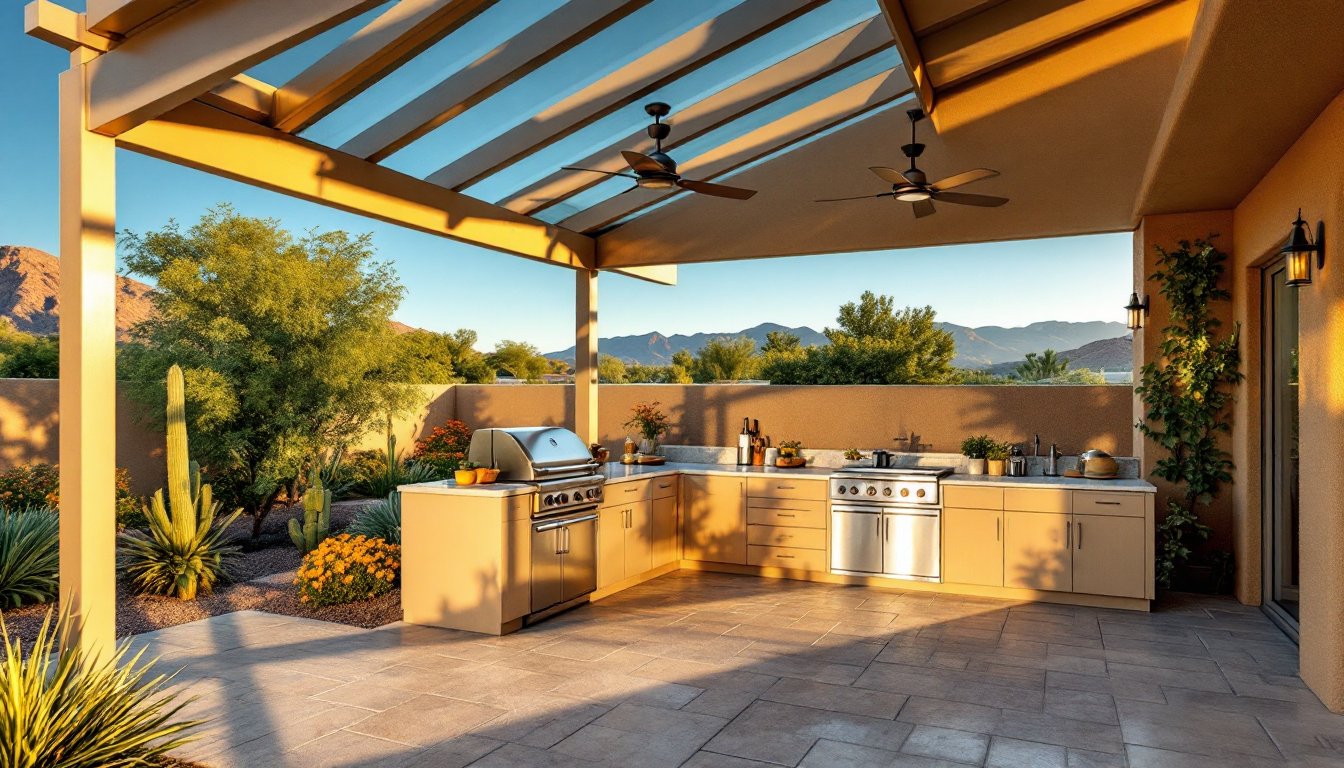

Phoenix homeowners spend more time outdoors than nearly anywhere else in the country, but desert living demands a different approach to outdoor kitchen design. Temperatures that soar past 115°F in summer, intense UV exposure, and monsoon season put serious stress on materials, appliances, and anyone trying to grill in July. An outdoor kitchen built for a temperate climate won’t survive, or function well, in the Valley of the Sun. This guide covers the climate-specific design considerations, material choices, shade strategies, and layout decisions that make Phoenix outdoor kitchens both durable and usable year-round.
Key Takeaways
- Phoenix outdoor kitchen design must account for extreme heat (110–120°F), intense UV exposure, and monsoon season to ensure materials survive and function year-round.
- Install solid shade structures like insulated roof panels, misting systems, and ceiling fans to make outdoor cooking tolerable during brutal summer months.
- Choose heat-resistant materials including granite or porcelain slab countertops, marine-grade polymer or aluminum cabinetry, and avoid quartz and wood that degrade under desert conditions.
- Position the grill and prep areas on the north or east side of your outdoor kitchen to minimize afternoon sun exposure on the cook.
- Ensure all gas, electrical, and water utilities meet Phoenix building codes (IRC with local amendments, NEC standards, and GFCI protection for outdoor outlets).
- Design for year-round usability by incorporating dimmable LED lighting, outdoor-rated refrigerators with shadowed placement, and heating elements like fire pits for winter entertainment.
Why Phoenix Climate Demands Unique Outdoor Kitchen Design
Phoenix isn’t just hot, it’s relentlessly hot, dry, and exposed to UV levels that degrade materials faster than almost anywhere in the continental U.S. Summer temperatures regularly hit 110°F to 120°F from June through August, with surface temperatures on stone counters and metal fixtures climbing even higher.
Standard outdoor kitchen components designed for coastal or temperate climates fail quickly here. Wood warps and splits. Some countertop materials crack under thermal cycling. Stainless steel handles become too hot to touch. Appliances without adequate ventilation overheat and shut down. Even adhesives and sealants break down faster under constant UV bombardment.
Monsoon season, typically mid-June through September, adds another layer of complexity. Sudden downpours, high winds, and dust storms test weatherproofing and drainage. Any outdoor kitchen design must account for rapid water runoff and prevent pooling around cabinetry or appliance bases.
Code considerations also come into play. Phoenix follows the International Residential Code (IRC) with local amendments. Gas line installations require permits and licensed contractors. Electrical work must meet National Electrical Code (NEC) standards, with GFCI protection for all outdoor outlets. Always check with the City of Phoenix Development Services or your local municipality before starting construction.
Essential Features for Phoenix Outdoor Kitchens
Building an outdoor kitchen in Phoenix means prioritizing durability, shade, and cooling from day one. These aren’t upgrades, they’re necessities.
Shade Structures and Cooling Solutions
Direct sun exposure makes outdoor spaces unusable for much of the day. A solid roof structure, not a fabric canopy, is the baseline for any functional Phoenix outdoor kitchen. Options include:
- Alumawood or aluminum patio covers: Powder-coated aluminum resists rust and reflects heat. These structures typically span 10 to 20 feet and can support ceiling fans and lighting.
- Solid insulated roof panels: Foam-core panels with metal skins provide better thermal performance than open-beam structures. They keep the space 10 to 15 degrees cooler.
- Integrated ramadas: Timber-frame or steel-frame structures with tongue-and-groove decking offer a more substantial look and superior shade density.
Cooling strategies go beyond shade. Misting systems reduce ambient temperatures by 20 to 30 degrees through evaporative cooling. Install mist lines around the perimeter of the cooking area, but keep nozzles away from grills and electrical outlets. Misting works best in low-humidity conditions, exactly what Phoenix offers most of the year.
Ceiling fans rated for outdoor use (wet or damp location, depending on coverage) are essential. Look for models with 56-inch or larger blades and DC motors that move air efficiently without drawing excessive power. Mount fans at least 7 feet above the finished floor, per NEC requirements.
Some homeowners add evaporative coolers (swamp coolers) to enclosed or semi-enclosed outdoor kitchens. These work well in dry months but lose effectiveness during monsoon season when humidity spikes.
Heat-Resistant Materials That Withstand Desert Conditions
Material selection makes or breaks a Phoenix outdoor kitchen. The wrong countertop or cabinet material will crack, fade, or fail within a few seasons.
Countertops: Avoid tile with grout lines (grout cracks and stains). The best performers in Phoenix heat are:
- Granite: Natural stone handles thermal cycling well. Seal it annually to prevent staining.
- Porcelain slab: Non-porous, UV-stable, and available in large-format slabs that minimize seams. More heat-tolerant than quartz.
- Concrete: Can be cast in place or precast. Requires proper sealing but handles extreme heat without issue.
Avoid quartz countertops outdoors in Phoenix. Resin binders can discolor or become brittle under prolonged UV and high heat.
Cabinetry: Wood cabinets, even cedar or teak, eventually warp and split. Better choices include:
- Marine-grade polymer cabinets: Fully waterproof, UV-stable, and impervious to insects. Brands like Trex Outdoor Kitchens use HDPE construction.
- Powder-coated aluminum frame cabinets with stainless steel doors: Lightweight, rust-proof, and durable.
- Stucco or masonry bases with access doors: Traditional Southwest approach. Build a CMU (concrete masonry unit) base, apply stucco finish, and install stainless steel access doors.
Flooring: Concrete pavers, natural stone (like flagstone), or poured concrete with a broom or salt finish all work well. Travertine stays cooler underfoot than most stone but can be slippery when wet. Avoid wood decking or composite decking in full sun, it becomes uncomfortably hot and degrades faster in Phoenix UV.
Layout and Design Styles for Arizona Desert Homes
Phoenix outdoor kitchens often follow a Southwestern or contemporary desert aesthetic, clean lines, warm earth tones, natural stone, and stucco finishes. These styles aren’t just visual preferences: they reflect materials and techniques that perform well in the climate.
A practical layout places the grill and cooktop along the north or east side of the structure, minimizing afternoon sun exposure on the cook. Position the sink and prep areas where shade is most consistent. If the outdoor kitchen connects to the house, locate it near the indoor kitchen or a service door to simplify utility runs and reduce walking distance.
L-shaped or U-shaped configurations work best for larger patios, providing ample counter space and separating cooking zones from serving or bar areas. For smaller yards, a straight-line galley layout with 6 to 8 feet of counter space is efficient and budget-friendly.
Leave at least 48 inches of clearance behind the cook for walkways. If seating (bar stools or dining chairs) is included, plan for an additional 36 inches of space.
Utility placement is critical. Gas lines should run underground in Schedule 40 steel or approved CSST (corrugated stainless steel tubing). Electrical lines need weatherproof conduit and GFCI-protected outlets. Water supply lines should be PEX or copper, buried below frost line (minimal concern in Phoenix) but protected from UV exposure where above-ground. Install shutoff valves inside the house for easy winterization or maintenance.
Desert landscaping, xeriscaping with native plants like palo verde, agave, or desert marigold, integrates the kitchen into the yard without adding irrigation demands. Avoid placing messy trees (like mesquite or palo verde) directly over the cooking area: their sap and seed pods create constant cleanup.
Maximizing Year-Round Usability in Extreme Heat
Phoenix outdoor kitchens see heavy use from October through April, when daytime highs range from the 60s to the 80s. The challenge is making the space tolerable, even enjoyable, during the brutal summer months.
Strategic timing matters. Summer cooking shifts to early morning or evening. Design lighting accordingly: install dimmable LED fixtures rated for outdoor use, with separate task lighting over the grill and prep areas. Pathway lighting and accent lights on stonework or plants extend usability after dark.
Appliance selection also impacts summer performance. Choose built-in grills with high BTU output and heavy-gauge stainless steel construction (304 or 316 grade). Infrared burners generate intense, focused heat that cooks faster, reducing time spent standing over a hot grill. Side burners, refrigerators, and ice makers should have weatherproof ratings and adequate ventilation to prevent overheating.
Refrigerators and ice makers are particularly vulnerable. Look for units with outdoor-rated compressors and insulated cabinets designed to operate in temperatures up to 110°F. Install them in the shadiest part of the kitchen and ensure airflow around compressor vents.
Windbreaks and privacy screens serve double duty: they block wind during monsoon storms and create shaded microclimates. Decorative concrete block (popular in mid-century Phoenix homes), steel screens, or natural stone walls all work well.
Don’t overlook outdoor heating for the handful of chilly winter evenings. A built-in fire pit or outdoor fireplace extends the social season and provides a gathering focal point. For more targeted warmth, install radiant patio heaters, either ceiling-mounted electric or freestanding propane models.
Finally, plan for maintenance access. Outdoor kitchens require regular cleaning, appliance servicing, and pest control (scorpions and spiders love dark cabinet interiors). Design cabinetry with removable panels or easy-access doors.
Conclusion
An outdoor kitchen in Phoenix isn’t a one-size-fits-all project. It demands climate-specific materials, robust shade structures, and thoughtful layout planning to handle extreme heat and monsoon weather. Done right, it transforms a backyard into a year-round living space that works with the desert, not against it. Prioritize durability, cooling, and code compliance from the start, and the result will be a functional, comfortable outdoor kitchen built to last in one of the country’s most demanding climates.